Short answer: the best unexplored places in Himachal Pradesh away from the crowds are Barot and Janjehli in Mandi district, Prashar Lake above Mandi, Shoja near the Jalori Pass, the Tirthan valley, Kalpa and Rakchham in Kinnaur, Bharmour in Chamba and, for the truly adventurous, the Pangi valley. The first five are 210–230 km (about 5–7 hours) from Chandigarh and easy to pair; Kinnaur needs a long day from Shimla; Bharmour and Pangi are a proper expedition. All of them give you mountains, forests and old villages without the traffic jams of Manali, Shimla or Kasol.
I will be honest with you: Himachal’s famous places are famous for good reasons, but in peak season they can feel like a city with a view. The good news is that the state is big and mostly rural, and a few hours from the busy circuits you still find villages where the evening sound is the river, not car horns. Below are nine places I would point a friend to, grouped by region, with real road distances, how to get there by bus, what the roads are like in each season, and who each suits.
The Nine Places at a Glance
| Place | District | Getting there | Height | Best for |
|---|---|---|---|---|
| Barot | Mandi | 64 km from Mandi; 224 km from Chandigarh | ≈1,800 m | Riverside calm, trout, forest walks |
| Prashar Lake | Mandi | 49 km from Mandi; 209 km from Chandigarh | ≈2,700 m | A lake, a temple and huge views |
| Janjehli | Mandi | 82 km from Mandi; 214 km from Chandigarh | ≈2,100 m | Orchards, the Shikari Devi trek |
| Shoja | Kullu | 230 km from Chandigarh via the Aut tunnel | ≈2,600 m | Forest stays, Jalori Pass |
| Tirthan valley | Kullu | 222 km from Chandigarh | ≈1,600 m | River, trout, national park |
| Kalpa | Kinnaur | 346 km from Chandigarh, via Shimla | ≈2,900 m | Kinner Kailash views, apples |
| Rakchham | Kinnaur | 347 km from Chandigarh, via Sangla | ≈3,000 m | A quiet Sangla-valley village |
| Bharmour | Chamba | 423 km from Chandigarh | ≈2,100 m | Ancient temples, Gaddi culture |
| Pangi valley | Chamba | Over the Sach Pass from Chamba, or via Lahaul | ≈2,600 m | Real remoteness, summer only |
Where They Are
Most of these places fall into three clusters: the green middle hills of Mandi and Kullu, the high, dry valleys of Kinnaur along the Sutlej and Baspa rivers to the east, and the remote north-west of Chamba. Pick one cluster per trip; trying to combine them means days on the road.
Mandi and Kullu: The Easy Escapes
1. Barot, Mandi
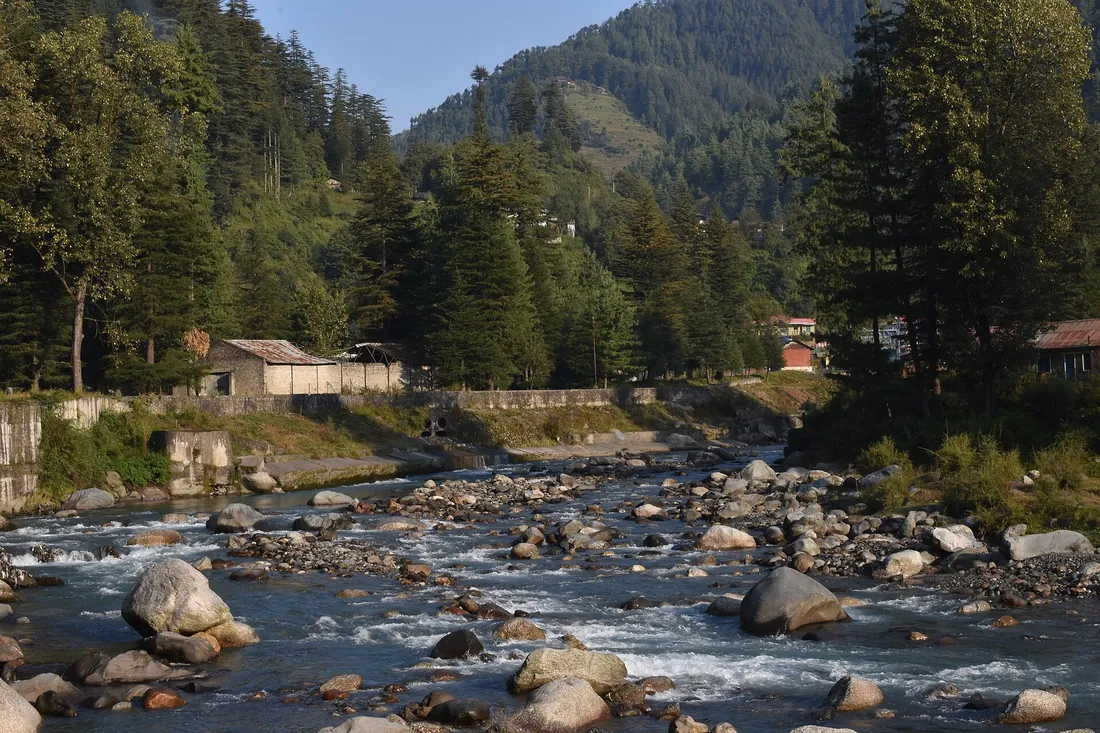
Barot is a small village on the Uhl river, about 64 km from Mandi, in a deep valley of deodar and pine. It grew around the Shanan hydel project, built by the British in the 1920s and 1930s, and its reservoir, trout farm and riverside paths make it one of the most peaceful places in central Himachal. Across the river, the forests of the Nargu Wildlife Sanctuary climb towards the Dhauladhar.
- Getting there: HRTC buses from Mandi and Jogindernagar; by car, about 2 hours from Mandi on a narrow mountain road.
- Stay: a few guesthouses, homestays and a PWD rest house; small and simple.
- Do: riverside walks, the trout farm, and day hikes towards Lohardi and the forest beyond.
2. Prashar Lake, Mandi
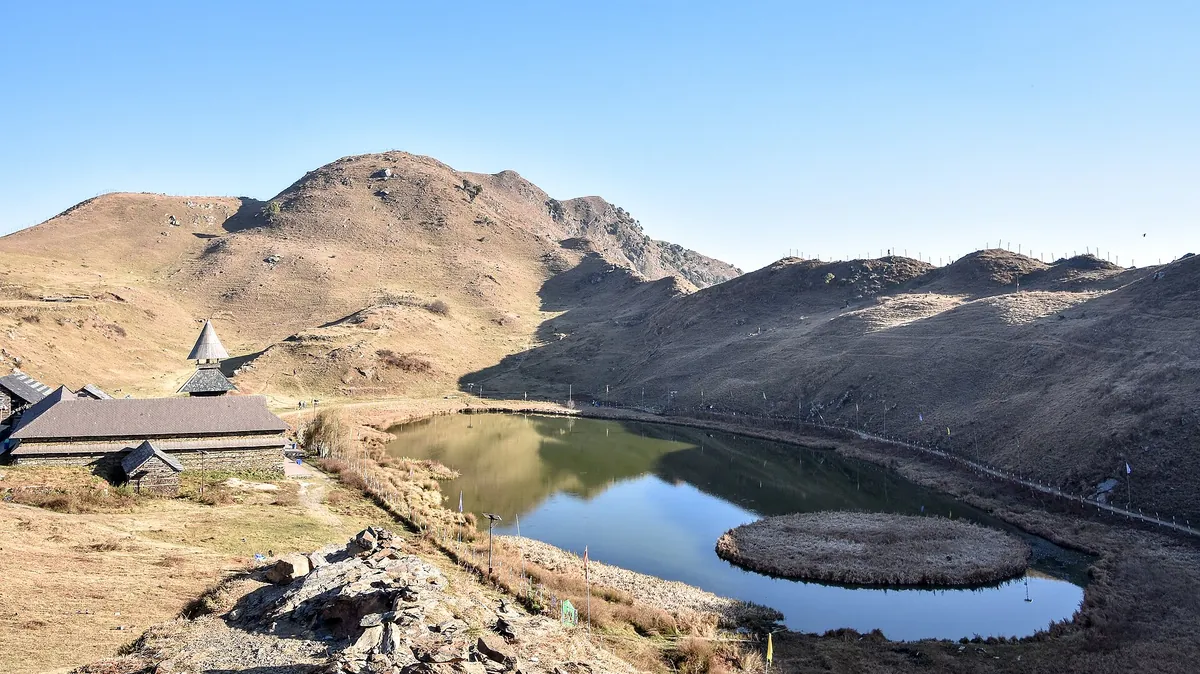
Prashar Lake sits in a grassy bowl at around 2,700 m, about 49 km from Mandi, with a three-tiered pagoda temple to the sage Prashar on its shore and a floating island of reeds that drifts across the water. From the ridge above, the Dhauladhar, Pir Panjal and Kinner Kailash ranges line up on a clear day. It is busy with day visitors on summer weekends, but stay overnight or go midweek and it is magical.
- Getting there: about 1.5 hours by road from Mandi via Kataula or Baggi; buses from Mandi run less often. The last stretch can close after heavy snow.
- Stay: a forest rest house and a few basic stays near the lake, or in Baggi and Kataula below.
- Season: lovely all year, snowy from about December to February.
3. Janjehli, Mandi
Janjehli is in the Seraj valley, about 82 km from Mandi at around 2,100 m: apple orchards, terraced fields, wooden temples and forested ridges. Most visitors come to trek to the Shikari Devi temple, high on a ridge above the valley, but the valley itself is the reward, with almost no tourist infrastructure and real village life.
- Getting there: HRTC buses from Mandi via Chail Chowk and Thunag; about 2.5–3 hours by car.
- Stay: a PWD rest house and a handful of homestays.
- Good to know: the Shikari Devi road and trail close with winter snow.
4. Shoja, Kullu
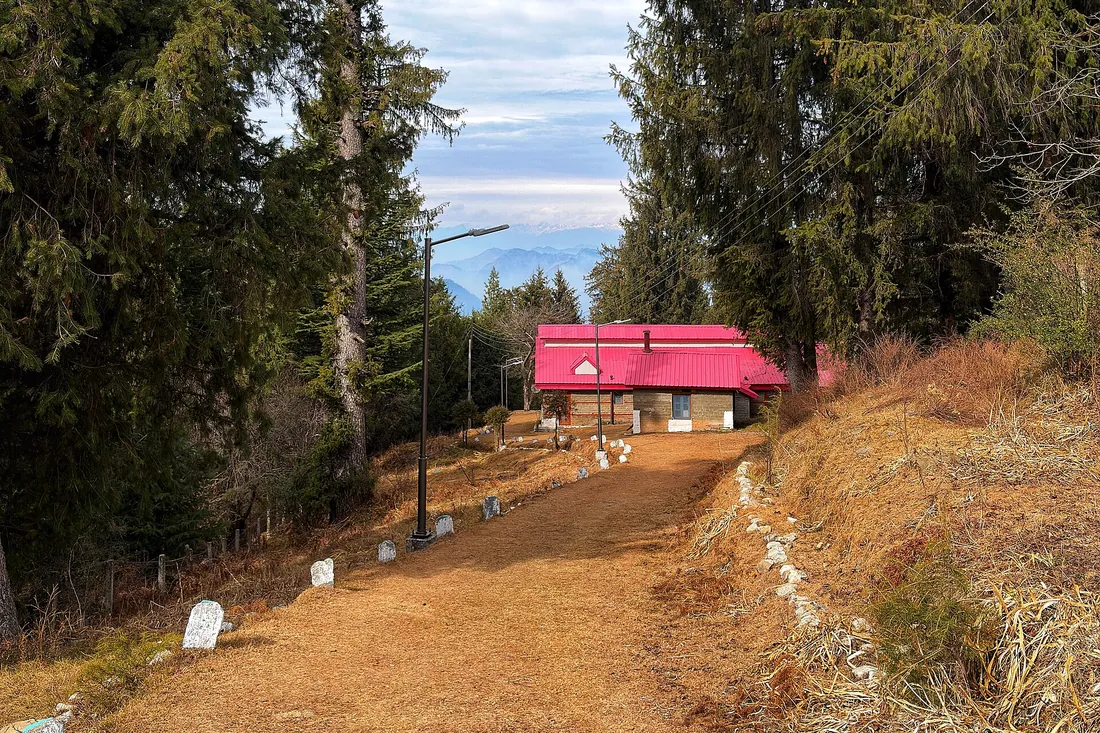
Shoja is a scattering of houses in thick forest just below the Jalori Pass, at about 2,600 m. It is quieter and higher than nearby Jibhi, with long views over the Tirthan and Banjar valleys. From the Jalori Pass, a gentle forest walk of about 5 km leads to the Serolsar lake, and in the other direction a trail climbs to the ruins of the Raghupur fort.
- Getting there: through the Aut tunnel to Banjar, then up towards the Jalori Pass. If you are coming by bus, our guide to reaching Jibhi from the Aut Tunnel by local bus covers the route; Shoja is a short ride further up.
- Roads: the Jalori Pass (NH-305) closes after heavy snow. After snowfall in February 2026, it was shut to all vehicles until NHAI reopened it for 4×4s only.
- Stay: homestays, cottages and a forest rest house.
5. Tirthan Valley, Kullu
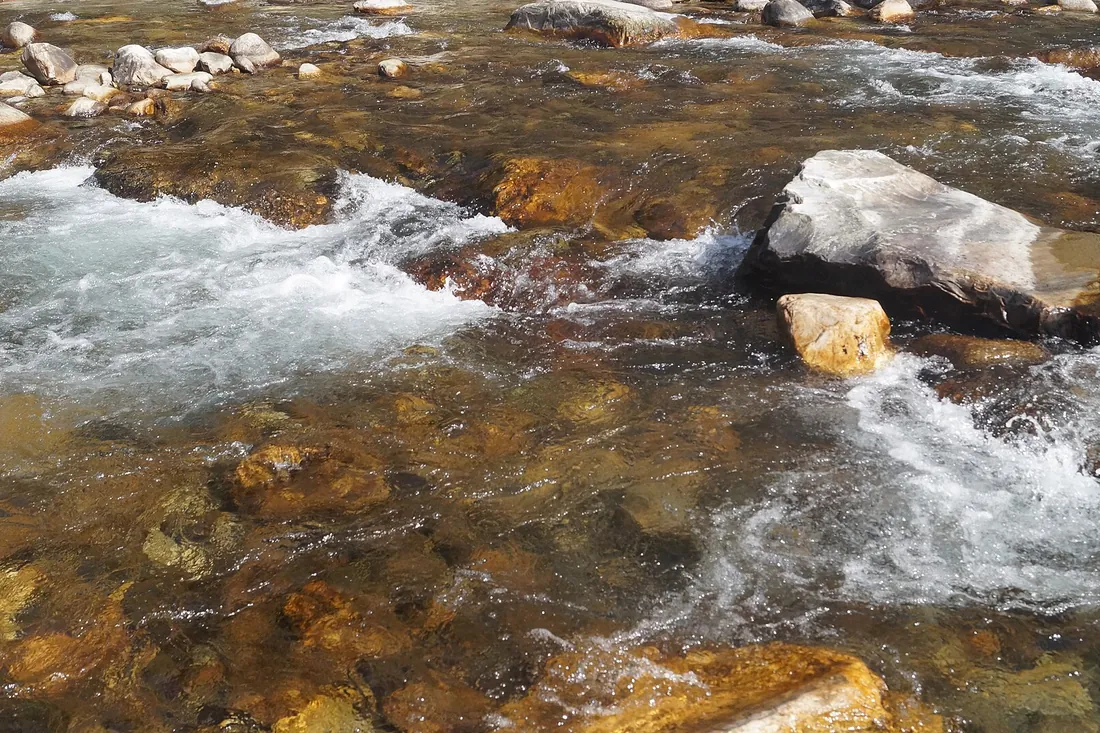
The Tirthan valley, around Gushaini at about 1,600 m, is the gateway to the Great Himalayan National Park, a UNESCO World Heritage Site since 2014. The clear Tirthan river is famous for trout, and its banks are lined with homestays, orchards and walking trails. It has become better known, but compared with Kasol or Manali, it is still calm and green.
- Getting there: through the Aut tunnel, then via Banjar to Gushaini; buses run from Aut and Banjar.
- Do: riverside walks, day hikes into the national park’s eco-zone, and village trails.
- Good to know: treks deep into the park need permits and a registered guide.
Kinnaur: High, Dry and Dramatic
Kinnaur is a long drive from anywhere, but it is a completely different Himachal: apple orchards and old wooden temples below bare rock walls and 6,000 m peaks. Most visitors pass through on the way to Spiti; stopping for a few days is where the quiet is.
6. Kalpa
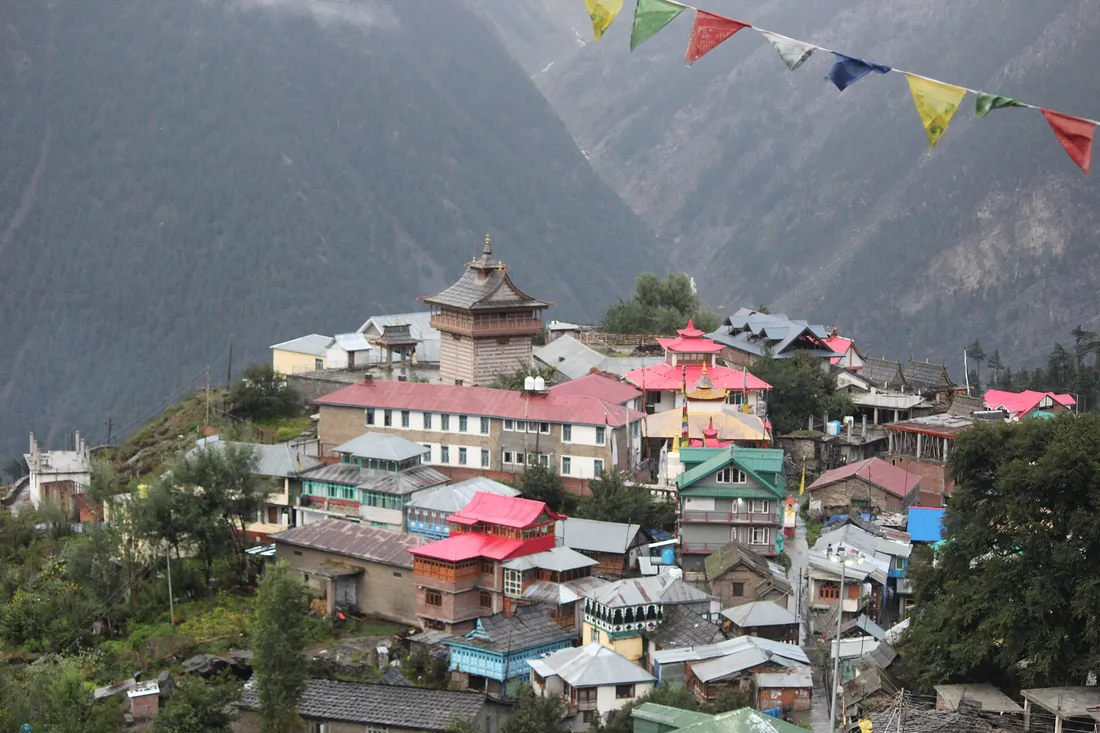
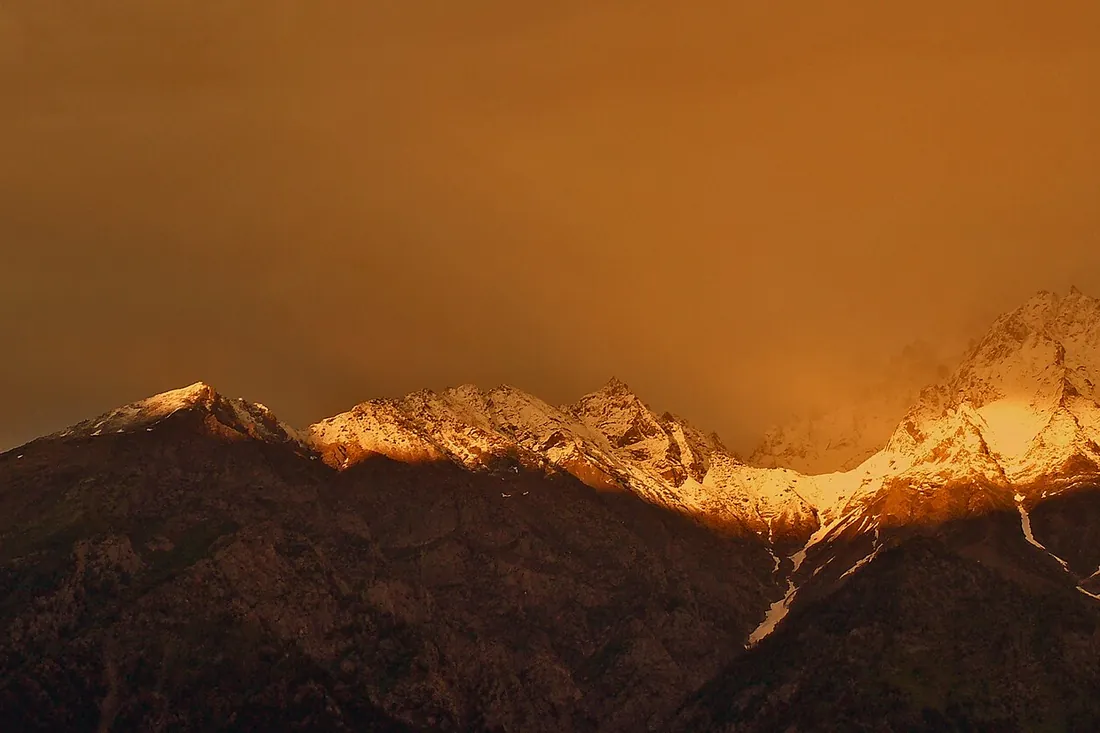
Kalpa, at about 2,900 m above Reckong Peo, looks straight across the Sutlej valley at the Kinner Kailash range, sacred to Hindus and Buddhists. At sunrise, the peaks turn gold and pink while the valley is still dark. The old village has carved temples, apple orchards and narrow lanes, and the cliff-edge village of Roghi is a short walk away.
- Getting there: HRTC buses run from Shimla to Reckong Peo, and Kalpa is a short ride up from Peo. By car, allow a full day from Shimla on NH-5.
- Stay: a good range of hotels and homestays, many with mountain-view rooms.
- Good to know: the Kinnaur highway is prone to landslides, especially in the monsoon. Start early and keep a spare day.
7. Rakchham, Sangla Valley
Rakchham is the village between Sangla and Chitkul in the Baspa valley, at around 3,000 m, and it gets a fraction of Chitkul’s visitors. Meadows run down to the river, snow peaks rise on both sides, and the old wooden houses are still lived in by farming families. It makes a calm base for exploring the whole valley.
- Getting there: HRTC buses from Reckong Peo to Sangla and Chitkul pass through; by car, it is a few hours from Kalpa.
- Stay: guesthouses, camps and a PWD rest house.
- Good to know: cash and mobile signal are limited this far up the valley; stock up in Sangla or Reckong Peo.
Chamba: Temples and True Remoteness
8. Bharmour
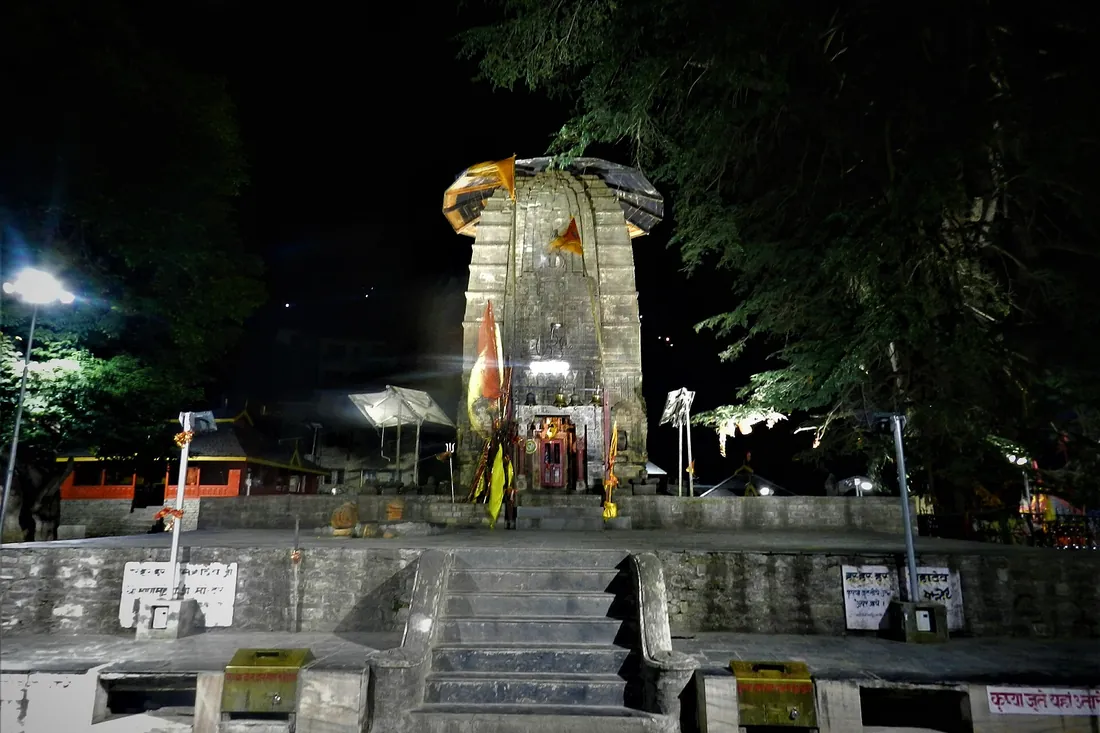
Bharmour, at about 2,100 m in the Budhil valley of Chamba district, was the ancient capital of the Chamba kingdom. At its heart is the Chaurasi temple complex, a courtyard of 84 shrines, some more than a thousand years old. It is the home of the semi-nomadic Gaddi shepherds and the base for the Manimahesh pilgrimage.
- Getting there: about 65 km from Chamba town; HRTC buses run from Chamba and Pathankot.
- Timing: avoid the Manimahesh Yatra weeks in August and September, when Bharmour is packed with pilgrims; any other time it is quiet.
- Stay: guesthouses and simple hotels in town.
9. Pangi Valley
The Pangi valley is one of the most isolated places in Himachal: a deep gorge of the Chenab, cut off by snow for months each year, with Killar as its main village at about 2,600 m. You reach it either over the Sach Pass, at about 4,400 m, from Chamba, or along the cliff-hanging road from Udaipur in Lahaul. The reward is raw scenery, villages untouched by tourism and a real sense of the edge of the map.
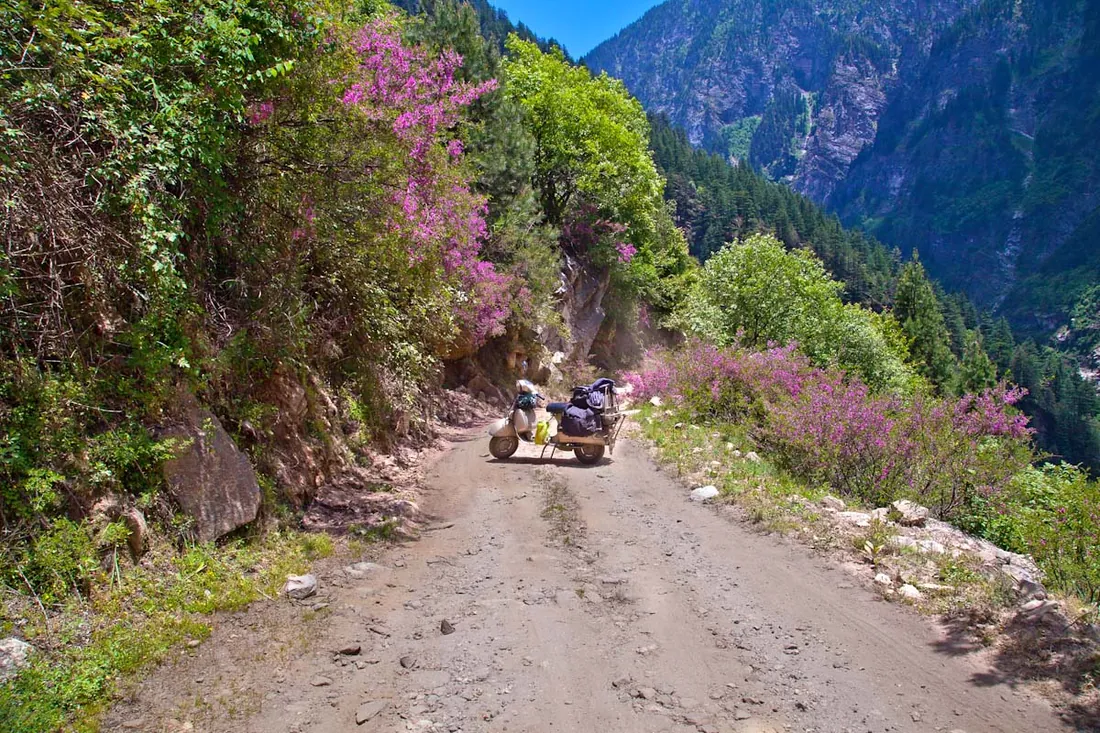
- Getting there: HRTC restored its direct Chamba–Killar bus over the Sach Pass on 1 July 2026, with a one-way fare of ₹432. The pass is usually open only from about June or July to October.
- Roads: landslides and floods damage the Pangi roads most monsoons; BRO usually repairs them quickly, but plan spare days.
- Stay: PWD rest houses, homestays and a few basic guesthouses. Carry cash; ATMs are rare.
How to Choose
| If you want… | Go to | Why |
|---|---|---|
| A long weekend from Delhi or Chandigarh | Barot, Prashar Lake or Tirthan | About 210–225 km from Chandigarh, easy to combine |
| Forest and quiet nights | Shoja | High in the woods below the Jalori Pass |
| Big Himalayan views | Kalpa | Kinner Kailash straight across the valley |
| Village life far from tourism | Janjehli or Rakchham | Working farms and old wooden houses |
| History and temples | Bharmour | The 84-shrine Chaurasi complex |
| A true adventure | Pangi valley | Over the Sach Pass to one of Himachal’s most remote valleys |
My advice: for a first offbeat trip, do a loop of Prashar Lake, Barot and the Tirthan valley or Shoja. It keeps the driving short, the roads are open most of the year, and you see lakes, rivers and forest. Keep Kinnaur for a week-long trip, and save Pangi for summer, a reliable vehicle and a flexible plan. If you are heading to Manali at the end, see our guide to where to stay in Manali.
Sample Itinerary: 5 Quiet Days from Chandigarh
- Day 1Chandigarh to Mandi, then up to Prashar Lake for sunset (about 210 km). Stay at the lake or in Baggi.
- Day 2Sunrise at the lake, then drive to Barot (about 3 hours via Mandi). Evening by the Uhl river.
- Day 3Barot to Tirthan through Mandi and the Aut tunnel. Afternoon walk along the river.
- Day 4Up to Shoja and the Jalori Pass; walk to Serolsar lake. Night in the forest.
- Day 5Back down through the Aut tunnel to Chandigarh (about 230 km, a long day).
Best Time to Visit
| Season | Mandi and Kullu group | Kinnaur | Chamba (Bharmour, Pangi) |
|---|---|---|---|
| March–June | Excellent; rhododendrons in spring | Good; apple blossom in April–May | Bharmour good; Sach Pass opens around June |
| July–September | Monsoon: green but landslide-prone | Risky roads; landslides | Pangi accessible but floods possible; Manimahesh crowds |
| October–November | Best: clear skies, autumn colour | Best: apple harvest, clear peaks | Good until the Sach Pass closes |
| December–February | Snow at Prashar, Shoja, Jalori; some roads shut | Very cold; roads mostly open | Pangi cut off by road; Bharmour cold |
Practical Tips
- Check the passes. The Jalori and the Sach close with snow; ask local police, HRTC or your host before setting off.
- Carry cash. ATMs are scarce in Shoja, Janjehli, Rakchham and Pangi, and UPI fails when the signal drops.
- Expect weak mobile signal, often BSNL or Jio only, and nothing at all in parts of Pangi. Download offline maps.
- Drive in daylight. Narrow roads, sheer drops and falling rocks are no place for night driving.
- Respect village customs. Many temples have rules about leather, photography and entry; ask first.
- Leave no trace. These villages have little waste collection. Carry your rubbish back to a town.
For more mountain inspiration, see our list of the best hill stations in India and the best road trips in India.
Frequently Asked Questions
Which is the least crowded place in Himachal Pradesh?
Of the places that are easy to reach, Barot, Janjehli and Shoja are among the quietest. For real remoteness, the Pangi valley in Chamba district gets very few tourists, but it is only reachable for a few months a year.
Which offbeat places in Himachal are closest to Chandigarh?
Prashar Lake (about 209 km), Janjehli (214 km), the Tirthan valley (222 km), Barot (224 km) and Shoja (230 km) are all within about 5–7 hours of Chandigarh by road.
How do I reach Barot by bus?
HRTC buses run to Barot from Mandi and Jogindernagar. Barot is about 64 km from Mandi, roughly 2 hours by road.
Is the Jalori Pass open in winter?
It closes after heavy snowfall. After snow in February 2026, NH-305 over the Jalori was shut to all vehicles until NHAI reopened it for 4×4s. Check road status before travelling between December and March.
How do I reach the Pangi valley?
Either over the Sach Pass from Chamba, open roughly June/July to October, or via Udaipur in Lahaul. HRTC restored its direct Chamba–Killar bus on 1 July 2026, with a fare of ₹432.
Is Kalpa worth visiting?
Yes. Kalpa faces the Kinner Kailash range across the Sutlej valley, has an old village of carved temples and orchards, and is much quieter than Shimla or Manali. It is a long day’s drive from Shimla.
What is the best time to visit offbeat Himachal?
October and November are the best overall, with clear skies and fewer visitors. March to June is also good. The July–September monsoon brings landslides, especially in Kinnaur and Chamba.
Is Tirthan valley still offbeat?
It is better known than it was, but it is still much calmer than Kasol or Manali. Stay away from the main road near Gushaini for the quietest homestays.
Is Prashar Lake crowded?
On summer weekends, day visitors make it busy around midday. Stay overnight or go on a weekday for the lake at its peaceful best.
Do I need a permit for these places?
No special permit is needed for Indian citizens at any of these nine places. Treks deep into the Great Himalayan National Park need a permit and a registered guide.
Final Thoughts
Himachal’s crowds gather in a handful of towns. Step away from them and you find Barot’s quiet river, Prashar’s lake in the sky, Shoja’s forests, Kalpa’s sunrise and the ancient temples of Bharmour, with the wild Pangi valley waiting for the bold. Choose one region, travel slowly, check the passes, and you will see the Himachal that most visitors drive straight past. For more ideas, browse our Hill Stations section.
Sources: road distances from OpenStreetMap and OSRM routing from Chandigarh ISBT and Mandi, and heights from SRTM elevation data (checked 26 November 2026); The Tribune reports on the Jalori Pass closure and NHAI reopening of NH-305 (2026), the HRTC Chamba–Killar bus over the Sach Pass (July 2026) and Pangi road repairs; UNESCO World Heritage listing of the Great Himalayan National Park (2014); Himachal Pradesh Tourism and HRTC route information. Road status changes quickly; check locally. Photos from Wikimedia Commons, credited in each caption.