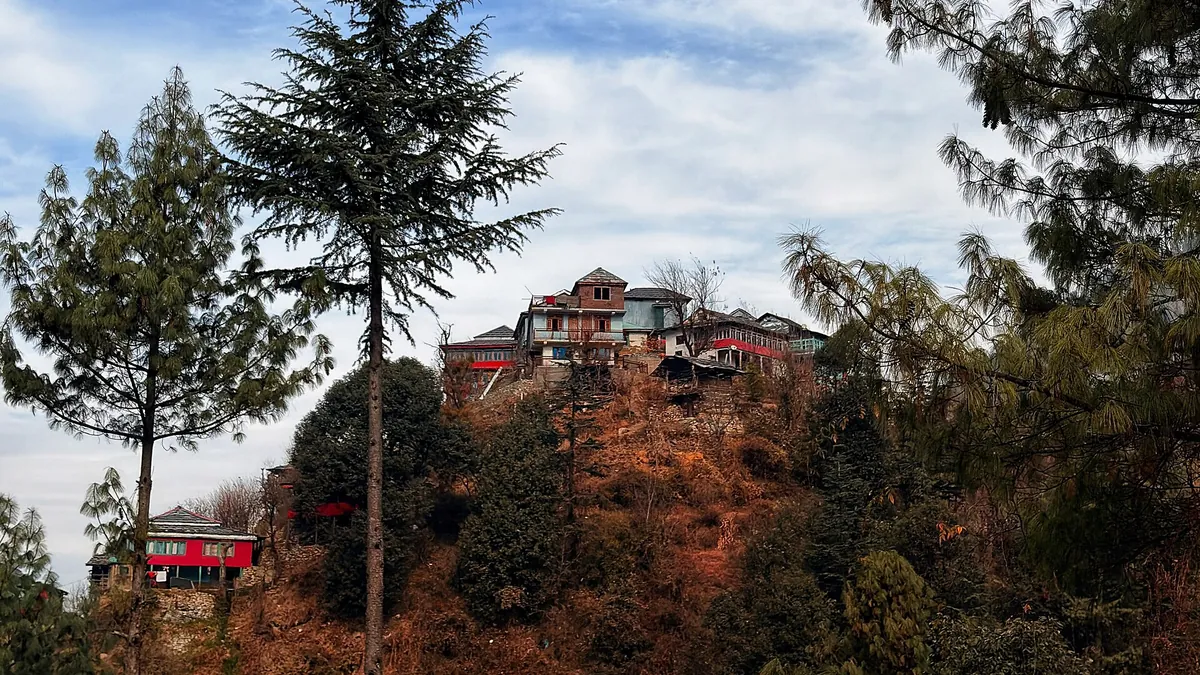
Short answer: from the Aut Tunnel, take any bus going to Banjar (22–25 km, about ₹63, 45–60 minutes). Then change at Banjar bus stand for a bus heading up towards Jibhi, Jalori, Anni or Sarahan (7.5 km, ₹20, about 20 minutes). Two HRTC buses go direct from Aut to Jibhi, at 6:30 am and 11:00 am, for ₹83. The last bus up from Banjar leaves at about 4:40 pm. Either way, the whole trip costs about ₹83 by bus. A taxi costs ₹1,200 or more.
I love this little stretch of road. You come off a long overnight bus at the Aut Tunnel, groggy and stiff, and within an hour the Tirthan river is racing beside you, the air smells of pine, and the wooden houses of Jibhi are waiting up the hill. It is one of the cheapest and most beautiful last-mile rides in Himachal. The only hard part is knowing where to stand and which bus to wave down. That is what this guide is for. I have laid out every step, every fare and the one mistake that confuses almost everyone, so your first morning in the Banjar valley is easy.
Aut Tunnel to Jibhi at a Glance
| What you need to know | Answer |
|---|---|
| Route | Aut Tunnel → Larji → Banjar (change) → Jibhi, on NH-305 |
| Distance | About 29.5 km from the Banjar turn at the tunnel, or about 32.5 km from Aut bus stand |
| Direct HRTC buses | 6:30 am and 11:00 am from Aut, ₹83 |
| Aut to Banjar | HRTC ₹63, plus frequent local buses (roughly every 30–45 minutes from about 6:30 am) |
| Banjar to Jibhi | ₹20, last bus about 4:40 pm |
| Time by bus | 45–60 min to Banjar, then 20–25 min to Jibhi, plus waiting time |
| Taxi instead | ₹1,200–1,500 (hatchback) or ₹1,800–2,200 (SUV) for the whole car |
| Cash and ATMs | ATMs and banks in Banjar. There is no ATM or petrol pump in Jibhi |
First, Which Side of the Aut Tunnel Are You On?
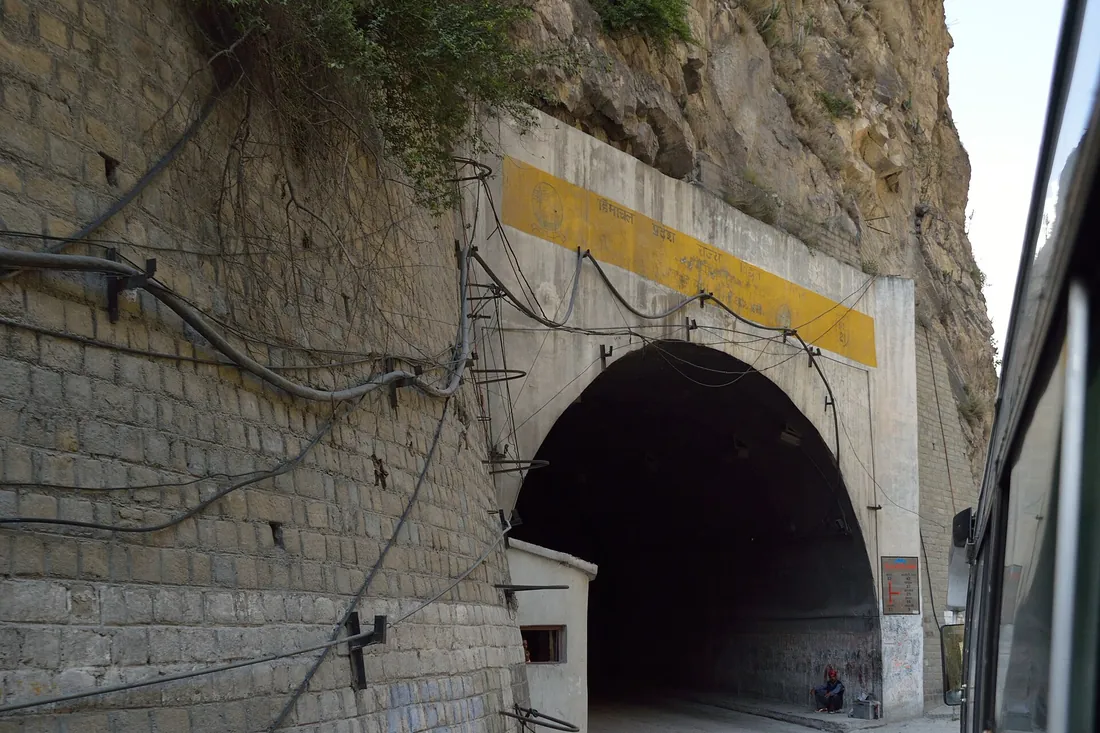
This is the single most useful thing to understand, and most guides get it muddled. The Aut Tunnel runs roughly north to south on the Chandigarh–Manali highway (NH-3). The road to Banjar and Jibhi (NH-305) leaves the highway at the southern mouth of the tunnel, on the Thalot side, and then follows the river past Larji. Aut town and its bus stand are at the other end, about 3 km away through the tunnel.
So if you are coming up from Delhi, Chandigarh or Mandi, you reach the Banjar turn before your bus enters the tunnel. If you are coming down from Manali, Kullu or Kasol, you pass Aut town first and reach the turn after the tunnel. That is why one website says the turn is “before the tunnel” and another says it is “just past” it. Both are right, for different directions.
Where should you ask the conductor to drop you?
- If you want the cheapest, simplest ride and a seat: stay on until Aut bus stand. Local buses to Banjar start there, so you can board early, pick a seat and put your bag down. They then drive back through the tunnel and turn off at the Banjar road.
- If your bus stops at the tunnel mouth (the Banjar turn): that is fine too. Banjar buses pass this point, so wait on the Banjar road side and wave one down. Later in the morning they can already be full, and you may have to stand for a while.
- If you are coming from Manali or Kullu: get down at Aut bus stand and take the Banjar bus from there.
Step by Step: Aut Tunnel to Jibhi by Local Bus
Step 1: Aut to Banjar (the long leg)
Look for a bus with Banjar on the board. HRTC (the state bus company) runs this route, and so do private local operators. Both charge regulated fares, so you will pay about the same either way. The HRTC fare from Aut to Banjar is ₹63. A shared cab, if one is waiting, usually charges ₹80–120 a seat and leaves when four people are in.
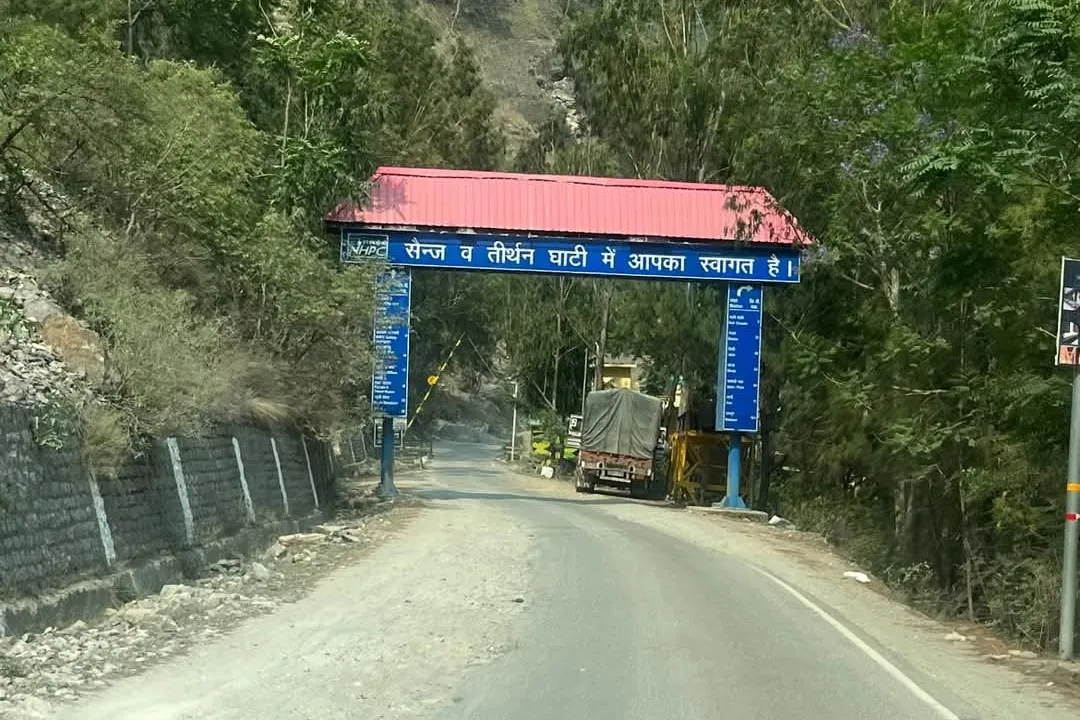
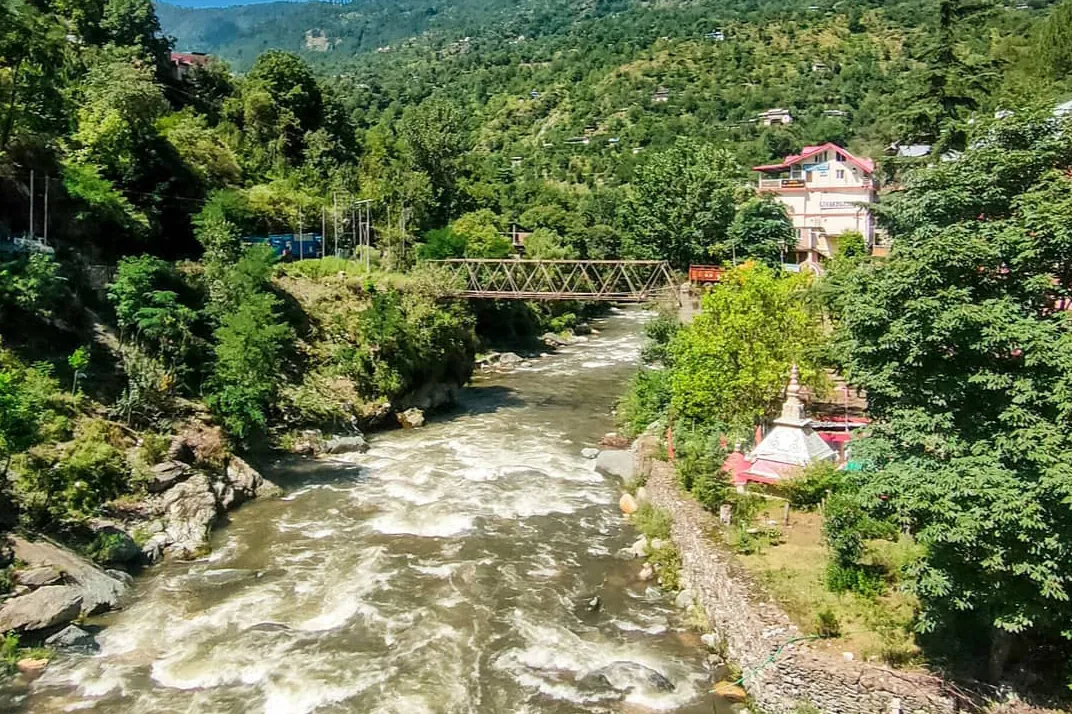
A few minutes after the tunnel you pass the blue welcome gate at Larji. Here the Sainj river comes in from one side and the Tirthan from the other. Your bus follows the Tirthan up a narrow, winding road. It is paved but tight, so if you get motion sickness, sit near the front and keep a window open.
Step 2: Banjar bus stand to Jibhi (the short climb)
Banjar’s bus stand sits about 1 km before the town centre, just past the Khundan bridge over the Tirthan. You do not need to walk into town to change buses. Wait at the stand for anything going up the Jalori road, such as buses to Jibhi, Jalori, Shoja, Anni or Sarahan. All of them pass through Jibhi. The fare is ₹20 and the climb takes about 20–25 minutes.
If you need cash, get it in Banjar. It has ATMs and branches of SBI and Punjab National Bank. Jibhi has neither an ATM nor a petrol pump.
Step 3: Getting down in Jibhi
Jibhi is small, and the bus stops on the main road through the village bazaar. Many homestays are a short walk up or down from there, and some are near the waterfall bridge or on the upper road towards Tandi. Tell the conductor the name of your stay when you board. Conductors will usually stop at the nearest point.
Aut to Jibhi Bus Timings
These are the HRTC services listed on HRTC’s booking system. Times at Banjar and Jibhi are approximate, because they depend on traffic and how long the bus waits at each stop.
| HRTC service | Leaves Aut | At Banjar | Reaches Jibhi | Fare from Aut |
|---|---|---|---|---|
| Kullu – Sarahan (731) | 6:30 am | ~7:30 am | ~8:20 am | ₹83 |
| Kullu – Chowai (824) | 11:00 am | ~12:30 pm | ~12:45 pm | ₹83 |
| Kullu – Anni (765) | Board at Banjar | 4:40 pm | ~4:52 pm | ₹20 from Banjar |
| Local Aut – Banjar buses | About every 30–45 min from ~6:30 am | About 1 hour later | Change at Banjar | ₹63 + ₹20 |
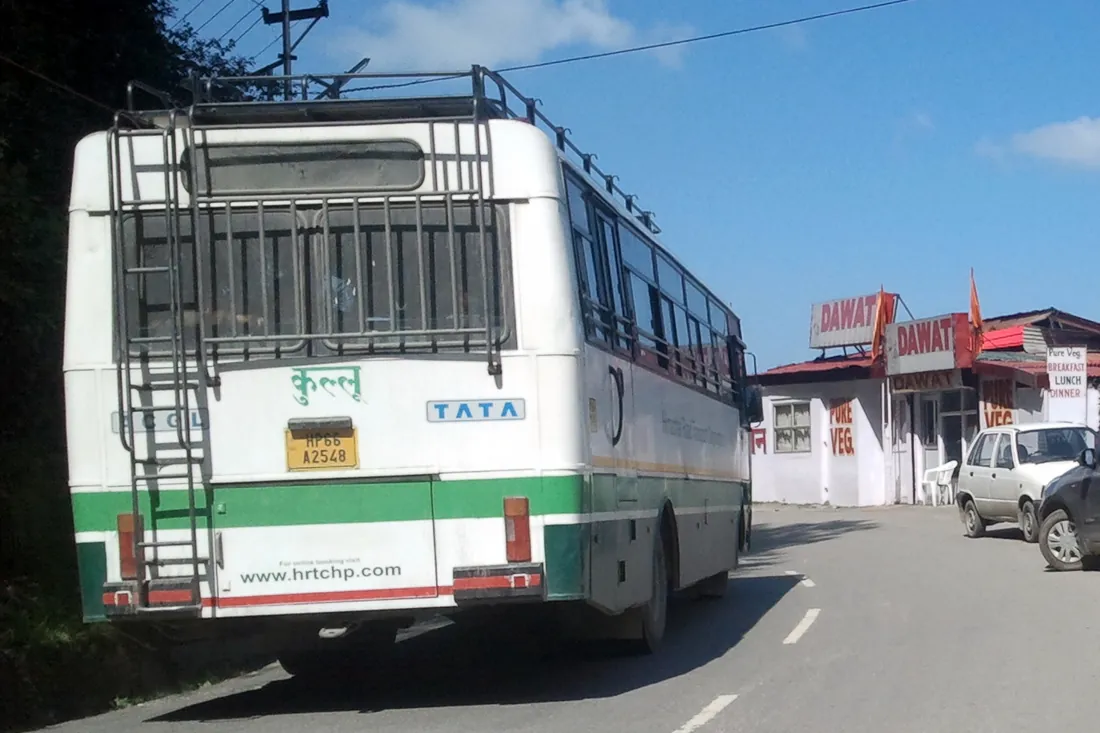
How Much Does It Cost? Bus vs Shared Cab vs Taxi
The bus is by far the cheapest way, and in daylight it is also very easy. Here is how the options compare.
| Option | Cost | Time | Best for |
|---|---|---|---|
| Local bus, change at Banjar | ₹63 + ₹20 = ₹83 | 1.5–2 hrs with waiting | Solo travellers and backpackers on a budget |
| Direct HRTC bus | ₹83 | About 1 hr 50 min | Anyone arriving at dawn who can catch the 6:30 am bus |
| Shared cab to Banjar, then bus | ₹80–120 + ₹20 | About 1.5 hrs | When the next bus is a long wait away |
| Taxi from Aut | ₹1,200–2,200 per car | About 1 hr | Groups of 3–4, families, late arrivals, heavy luggage |
Why is the fare ₹63? Himachal’s ordinary buses charge by distance. Since the May 2025 revision, the rate in hill areas is ₹2.50 per km. Aut bus stand to Banjar is about 25.5 km, so 25.5 × ₹2.50 ≈ ₹64, and the ticket is ₹63. Banjar to Jibhi is about 7.5 km, which works out to about ₹19, so ₹20. If a conductor ever asks you for much more on an ordinary bus, politely ask for a printed ticket.
A Simple Plan If You Arrive on an Overnight Bus
Most people reach Aut on an overnight Volvo from Delhi or Chandigarh, arriving between about 5 and 7 am. Here is the easy, stress-free way to do the morning.
- 5:30 amGet off at Aut bus stand (or at the Banjar turn, if that is where your bus stops). Find a chai stall and stretch your legs.
- 6:30 amBoard the direct HRTC bus to Jibhi (₹83). If you miss it, take the next local bus to Banjar.
- 7:30 amPass through Banjar bus stand. If you are on a local bus, change here for any bus going towards Jalori.
- 8:20 amArrive in Jibhi in time for breakfast, with the whole day ahead of you.
Arriving in the afternoon instead? You still have time. Local buses to Banjar run through the day, but give yourself enough time to be at Banjar bus stand before the 4:40 pm bus up.
Missed the Last Bus? Your Options
- Banjar taxi stand: the local taxi union stand is right next to Banjar bus stand. A car to Jibhi costs about ₹400–600, whatever the number of passengers.
- Shared cabs: in the morning, shared cabs sometimes wait near Aut bus stand and fill up with passengers going to Banjar or Jibhi.
- Ask your homestay: most Jibhi homestays will arrange a pickup from Aut or Banjar if you message them a day ahead. This is the best plan if you are arriving after dark.
- Taxi from Aut: about ₹1,200–1,500 for a hatchback or ₹1,800–2,200 for an SUV. Agree the fare before you get in, because taxis here are not metered.
Going Back: Jibhi to Aut by Bus
The return trip is the same route in reverse, but there is one catch. The downhill buses from Jibhi towards Banjar and Aut are usually not bookable online, so you board them on the road. Ask your homestay what time the morning buses pass, and stand at the main road stop a little early.
- Take any bus down to Banjar (₹20), then a bus to Aut (₹63).
- If you are catching an evening Volvo to Delhi or Chandigarh from Aut, leave Jibhi at least 90 minutes before departure, and add extra time in winter or monsoon.
- Some bus companies (such as Zingbus) pick up Jibhi passengers from Banjar by cab. Check what your ticket says.
Best Time to Do This Bus Journey
| Season | What to expect on the road | My advice |
|---|---|---|
| March–June | Buses run normally. Pleasant days and busy weekends. | An easy time to go. Book stays for long weekends early. |
| July–September | Monsoon. Landslides can block NH-305, especially beyond Jibhi towards Jalori. | Travel in daylight only, keep a buffer day and check the news for road closures. |
| October–November | Clear skies, dry roads and reliable buses. | The best time for this trip. |
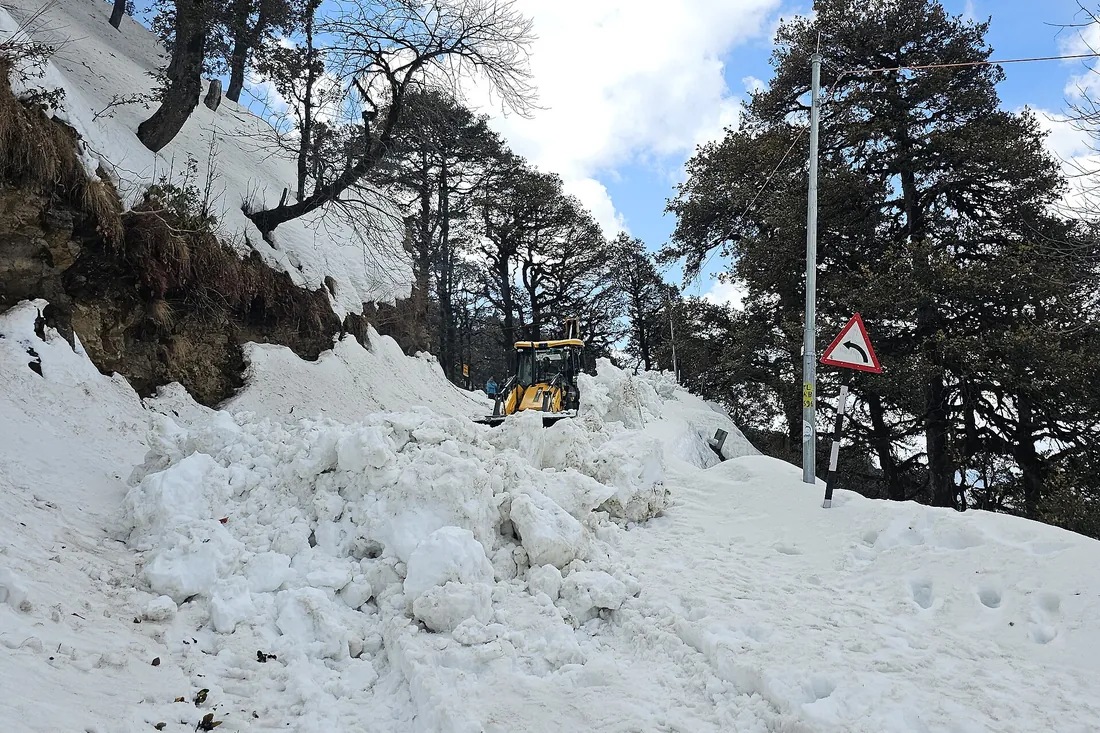
| December–February | Snow is possible in Jibhi. Buses that cross Jalori Pass (to Anni and Sarahan) can stop for weeks. | Aut–Banjar–Jibhi usually keeps running, but heavy snow can close the last climb for a day or two. |
After the 2025 monsoon, HRTC suspended its buses over Jalori Pass from late June and resumed only some routes more than three months later. The Banjar–Jibhi stretch is far more dependable than the road over the pass, but it is worth knowing how quickly things can change in the rains.
Practical Tips for the Ride
- Carry small change. Conductors on local buses rarely have change for ₹500 notes. Keep a few ₹10, ₹20 and ₹50 notes ready.
- Withdraw cash in Banjar. Jibhi has no ATM, and many small homestays and cafés prefer cash or UPI. UPI only works when the network does.
- Expect patchy mobile signal. Coverage drops in places after Aut and inside the valley. Download an offline map and save your homestay’s phone number before you leave the highway.
- Pack light. Local buses have little luggage space. A backpack you can keep on your lap is much easier than a big suitcase.
- Sit near the front if winding roads bother you, and keep a window open. The road after Larji is narrow and full of bends.
- Avoid arriving after dark, especially in the monsoon. The road is narrow, and buses become rare after the evening.
Coming from Kasol or Manali Instead?
From Manali or Kullu, take any bus towards Mandi and get down at Aut bus stand (about 70 km from Manali). From Kasol, take a bus to Bhuntar first, then any Mandi-bound bus to Aut. Bhuntar to Aut is only about 22 km. From Aut, follow exactly the same steps as above. For more Himachal ideas, see our list of the best hill stations in India.
What Is Waiting for You in Jibhi
Once you have arrived, slow down. Jibhi is a place for long breakfasts and short walks: the little Jibhi waterfall is a short stroll from the bazaar, Chehni Kothi, an old wooden tower, is a few kilometres away, and the road continues to Shoja (7.5 km) and Jalori Pass (about 13 km), where trails lead to Serolsar Lake and Raghupur Fort. Honestly, the bus ride is the perfect introduction. By the time you get off, you are already on valley time.
Frequently Asked Questions
Is there a direct bus from Aut Tunnel to Jibhi?
Yes. HRTC lists two direct buses from Aut that pass through Banjar and Jibhi: the Kullu–Sarahan bus at about 6:30 am and the Kullu–Chowai bus at about 11:00 am. The fare is ₹83. At other times, take a local bus to Banjar and change.
How far is Jibhi from the Aut Tunnel?
About 29.5 km by road from the Banjar turn at the southern mouth of the tunnel, or about 32.5 km from Aut bus stand. The route goes via Larji and Banjar on NH-305.
What is the bus fare from Aut to Jibhi?
About ₹83 in total: ₹63 from Aut to Banjar and ₹20 from Banjar to Jibhi. The direct HRTC bus also costs ₹83.
How long does the bus take from Aut to Jibhi?
About 45–60 minutes from Aut to Banjar and 20–25 minutes from Banjar to Jibhi. With waiting time, plan for 1.5 to 2 hours.
What time is the last bus from Banjar to Jibhi?
The last HRTC bus listed from Banjar up to Jibhi leaves at about 4:40 pm. After that you will need a taxi, which costs about ₹400–600 for the car.
Should I get down at the Aut Tunnel or at Aut bus stand?
If you can, ride on to Aut bus stand. Banjar buses start there, so you will get a seat. If your bus drops you at the tunnel mouth, you can still catch Banjar buses as they pass, but they may already be full.
How much is a taxi from Aut to Jibhi?
About ₹1,200–1,500 for a hatchback and ₹1,800–2,200 for an SUV, per car, one way. Fares are fixed rather than metered, so agree the price first.
Is there an ATM in Jibhi?
No. The nearest ATMs, banks and petrol pump are in Banjar, about 7.5 km away. Withdraw cash before you leave Banjar.
Do buses run from Aut to Jibhi in winter?
The Aut–Banjar–Jibhi buses usually keep running in winter. Buses that cross Jalori Pass, such as those to Anni and Sarahan, can stop for weeks after heavy snow, and snow can occasionally close the final climb to Jibhi for a day or two.
Can I reach Jibhi from Kasol by local bus?
Yes. Take a bus from Kasol to Bhuntar, then a Mandi-bound bus to Aut, and from Aut follow the same route via Banjar to Jibhi.
Final Thoughts
Reaching Jibhi from the Aut Tunnel by local bus is simple once you know the trick. The Banjar road leaves at the Thalot end of the tunnel, Banjar buses start from Aut bus stand, and you change at Banjar for anything heading up the Jalori road. Catch the 6:30 am direct bus if you can, carry small change, and be at Banjar before 4:40 pm. For about ₹83, you will ride one of the prettiest short routes in Himachal. Have a wonderful trip, and if you are planning a longer journey, our guide to the best road trips in India and our India travel itineraries will help you plan the rest. You can find more route guides in our Road Trips section.
Sources: HRTC online booking timetable (as listed on 4 November 2026); Himachal Pradesh Transport Department fare notification of May 2025 (ordinary hill fare ₹2.50/km); road distances from OpenStreetMap and OSRM routing; jibhi.life route notes; The Tribune reporting on HRTC Jalori services after the 2025 monsoon. Photos from Wikimedia Commons, credited in each caption.