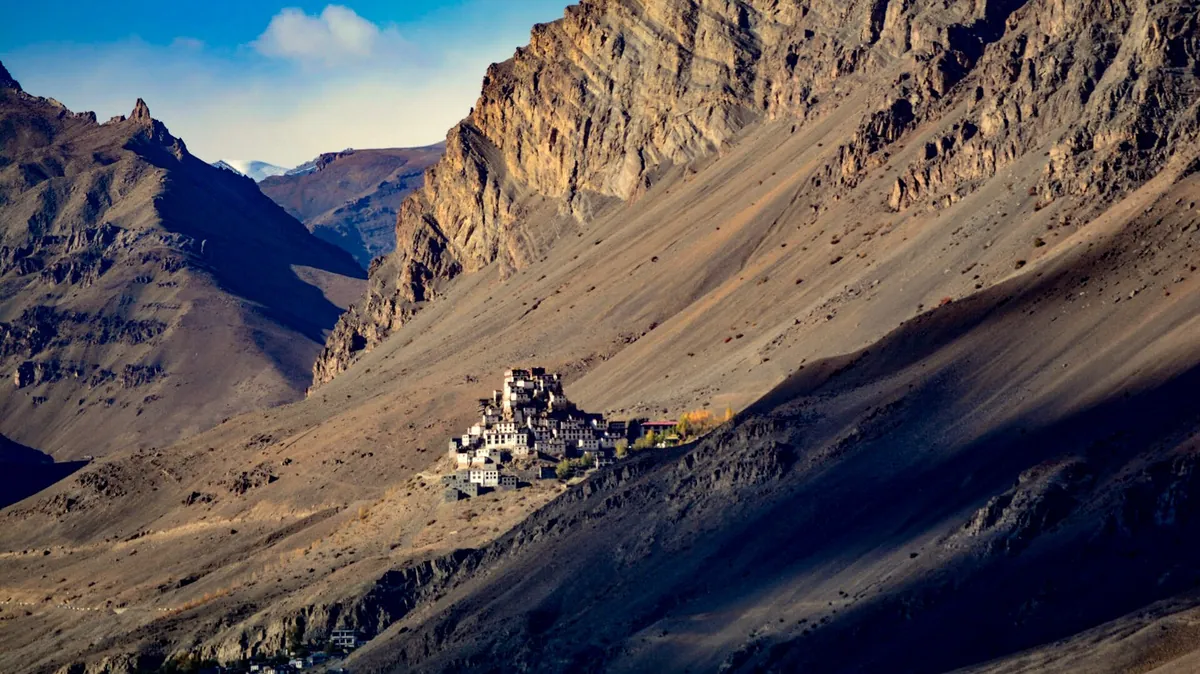
Short answer: the best 7-day Spiti loop from Chandigarh by tempo traveller goes clockwise through Kinnaur and back via Manali: Chandigarh → Sarahan (280 km) → Kalpa (96 km) → Nako (109 km) → Tabo (63 km) → Kaza (47 km), a full day around Kaza (Key, Kibber, Langza, Hikkim, Komic), then Kaza → Chandratal → Manali over the Kunzum La, and Manali → Chandigarh (265 km). That is about 1,050–1,100 km. Going up through Kinnaur lets you gain height slowly, which matters at Kaza’s 3,650 m. The full loop works only when the Kunzum La is open, usually June to mid-October; at other times, do Kinnaur and Spiti out and back via Shimla. A 12-seater tempo traveller typically costs ₹35,000–55,000 for the week, around ₹3,500–5,500 per person for a group of ten, plus stays and food.
I will be honest with you: seven days is the minimum for this loop, not a relaxed pace. You will spend three long days on the road, and the itinerary depends on two things you cannot control: landslides on the Kinnaur highway and snow on the Kunzum La. Below is a day-by-day plan that builds in acclimatisation, with real distances, where to stay, what the tempo traveller costs, the permits and fees, and a Plan B for when the passes are closed.
The 7-Day Plan at a Glance
| Day | Route | Distance | Drive time | Night at |
|---|---|---|---|---|
| 1 | Chandigarh → Shimla → Narkanda → Sarahan | 280 km | 9–10 hrs | Sarahan (≈2,150 m) |
| 2 | Sarahan → Karcham → Reckong Peo → Kalpa | 96 km | 4–5 hrs | Kalpa (≈2,900 m) |
| 3 | Kalpa → Khab → Nako | 109 km | 4–5 hrs | Nako (≈3,600 m) |
| 4 | Nako → Tabo → Dhankar → Kaza | 110 km | 4–5 hrs | Kaza (≈3,650 m) |
| 5 | Kaza: Key, Kibber, Langza, Hikkim, Komic | ≈70 km loop | Full day | Kaza |
| 6 | Kaza → Losar → Kunzum La → Chandratal → Manali | ≈210 km | 10–12 hrs | Manali (≈1,900 m) |
| 7 | Manali → Chandigarh | 265 km | 7–9 hrs | Home |
The Route on One Page
Why Go Clockwise, Through Kinnaur First?
Kaza is at about 3,650 m and the Kunzum La about 4,550 m. Coming from Manali, you climb from 1,900 m to over 4,500 m in a single day, which is a classic recipe for altitude sickness. Going up through Kinnaur, you sleep at 2,150 m, then 2,900 m, then 3,600 m before reaching Kaza, giving your body three nights to adjust. You also do the hardest road, the Kunzum crossing, on the way out, when you are fit and acclimatised.
Day-by-Day Itinerary
Day 1: Chandigarh to Sarahan (280 km)
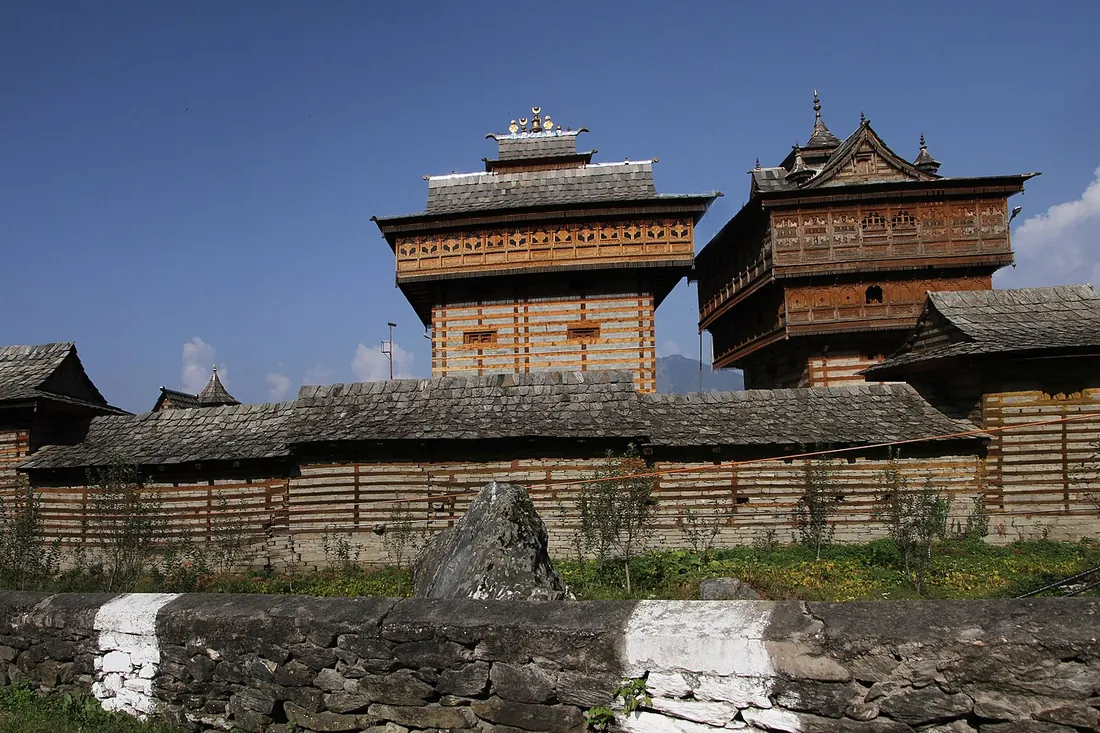
Leave by 5–6 am to clear Shimla before the traffic. The road climbs through Shimla and Narkanda, then drops to the Sutlej at Rampur before a short climb to Sarahan. This is the longest driving day; stop for breakfast past Shimla and lunch at Rampur. In Sarahan, visit the Bhimakali temple, a beautiful wooden temple in the Kinnauri style, in the evening light.
Day 2: Sarahan to Kalpa (96 km)
A shorter day along the Sutlej through Karcham to Reckong Peo, Kinnaur’s district headquarters, then up to Kalpa. Use the afternoon to rest and acclimatise, walk to Roghi village, and watch sunset and sunrise on the Kinner Kailash range. Reckong Peo is the last big town with reliable ATMs and fuel; stock up. Our guide to unexplored places in Himachal has more on Kalpa, and our Kinnaur cash guide explains why to carry enough money.
Day 3: Kalpa to Nako (109 km)
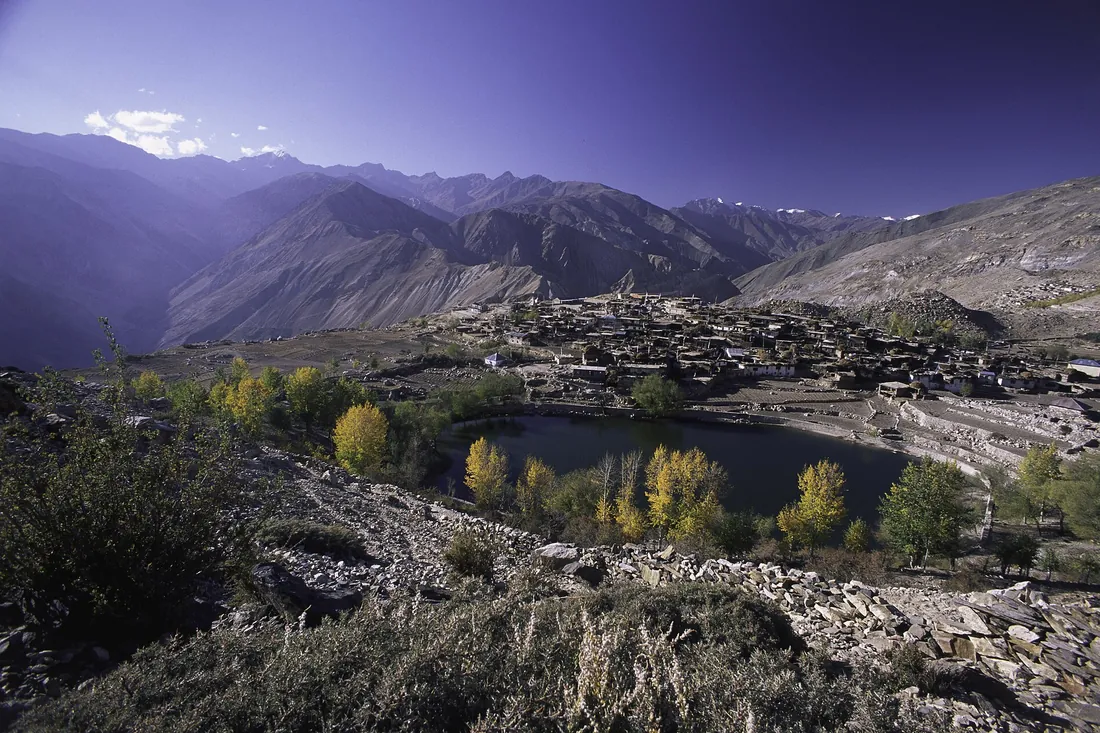
The road becomes dramatic after Pooh, cut into cliffs above the Sutlej. At Khab, the Spiti river joins the Sutlej, and the road climbs the famous hairpins towards Nako. Malling, between Khab and Nako, is a notorious landslide spot that can hold traffic for hours. Nako is a stone village at about 3,600 m around a small lake, with an old monastery. Take it easy: this is your first night at real altitude.
Day 4: Nako to Kaza via Tabo and Dhankar (110 km)
Cross into Spiti at Sumdo and stop at Tabo, whose monastery, founded in 996, has some of the finest early Buddhist murals in the Himalayas. After lunch, detour up to Dhankar’s cliff-top monastery and fort if you have the energy, then continue to Kaza, Spiti’s main town.
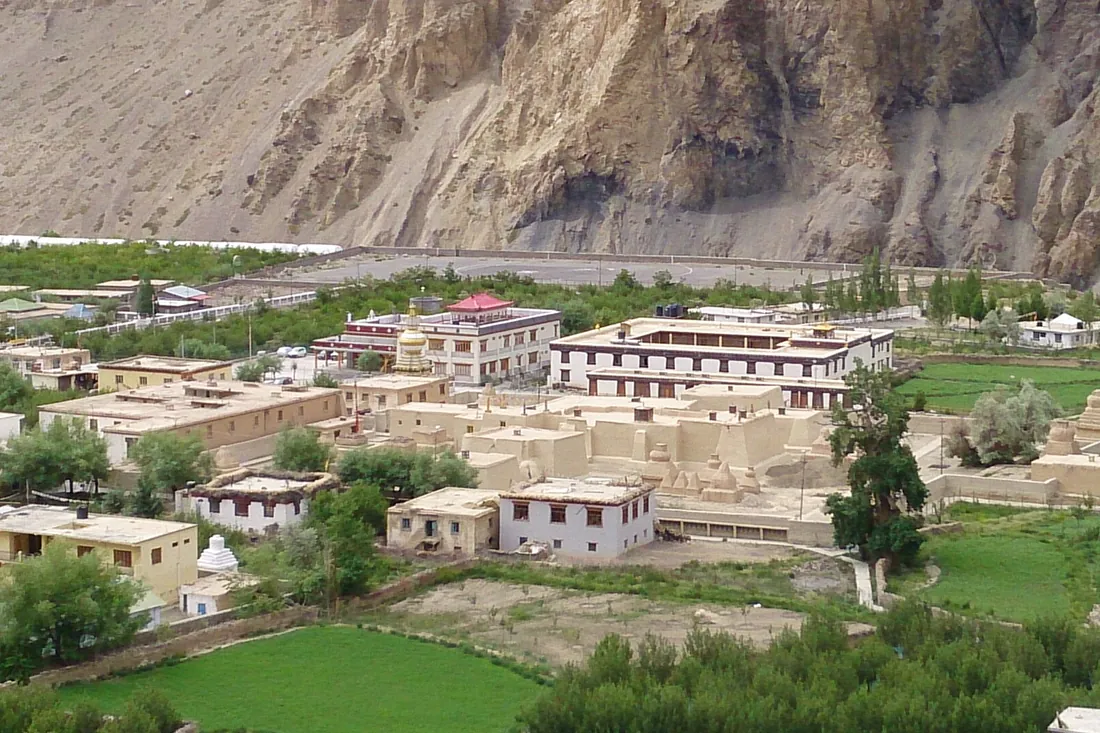
Day 5: Around Kaza
A full day in Spiti’s high villages: Key Monastery on its hill, Kibber village, the Chicham bridge over a deep gorge, the giant Buddha at Langza, the post office at Hikkim, often described as the world’s highest, and the village of Komic. Roads are narrow; your tempo traveller can handle most of them, but some drivers prefer local taxis for the steepest stretches.
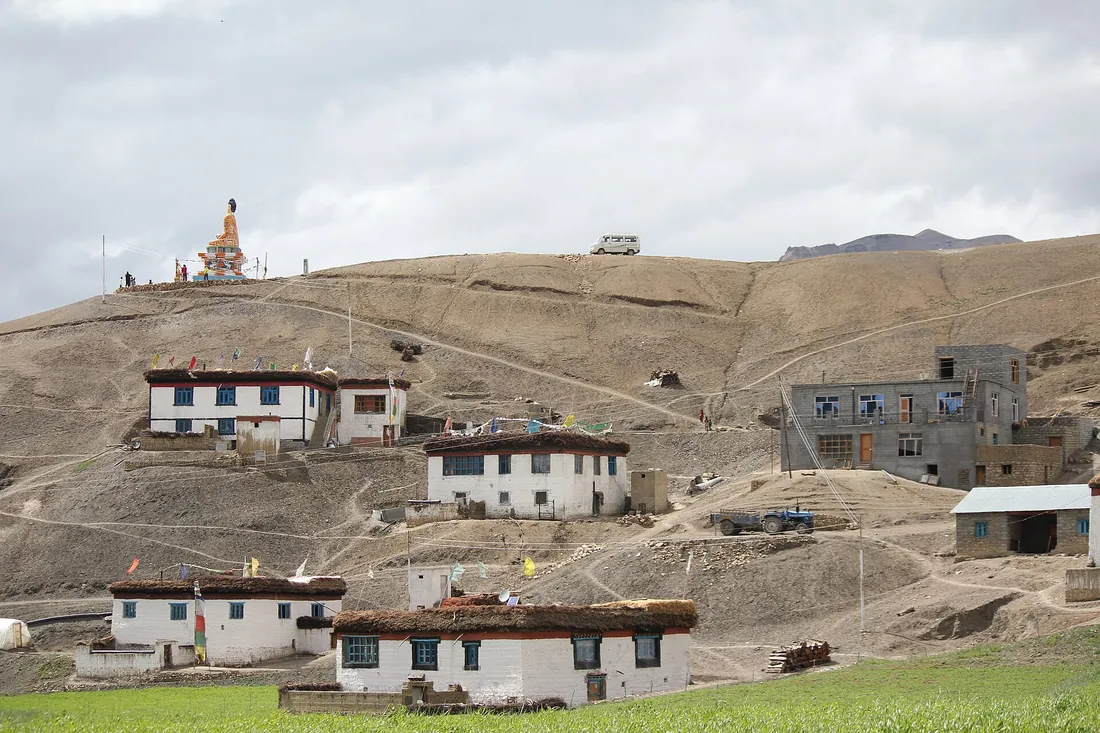
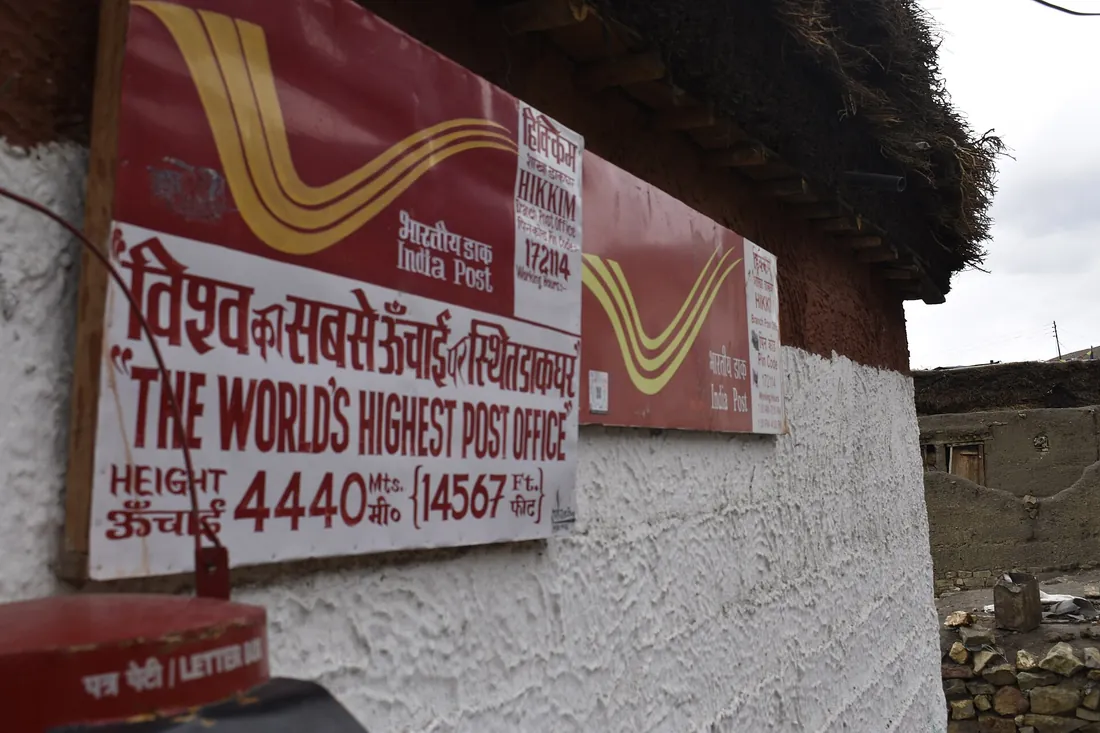
Day 6: Kaza to Manali via Kunzum La and Chandratal (about 210 km)
The toughest day. Leave Kaza at first light, pass Losar, the last Spiti village, and cross the Kunzum La at about 4,550 m. Take the detour to Chandratal, the crescent “moon lake”, then continue down the rough Batal–Gramphu stretch, often streams across the road, to the Atal Tunnel and Manali. Expect 10–12 hours. If the day runs late or the road is bad, consider spending the night at the Chandratal camps instead and moving to Manali on day 7.
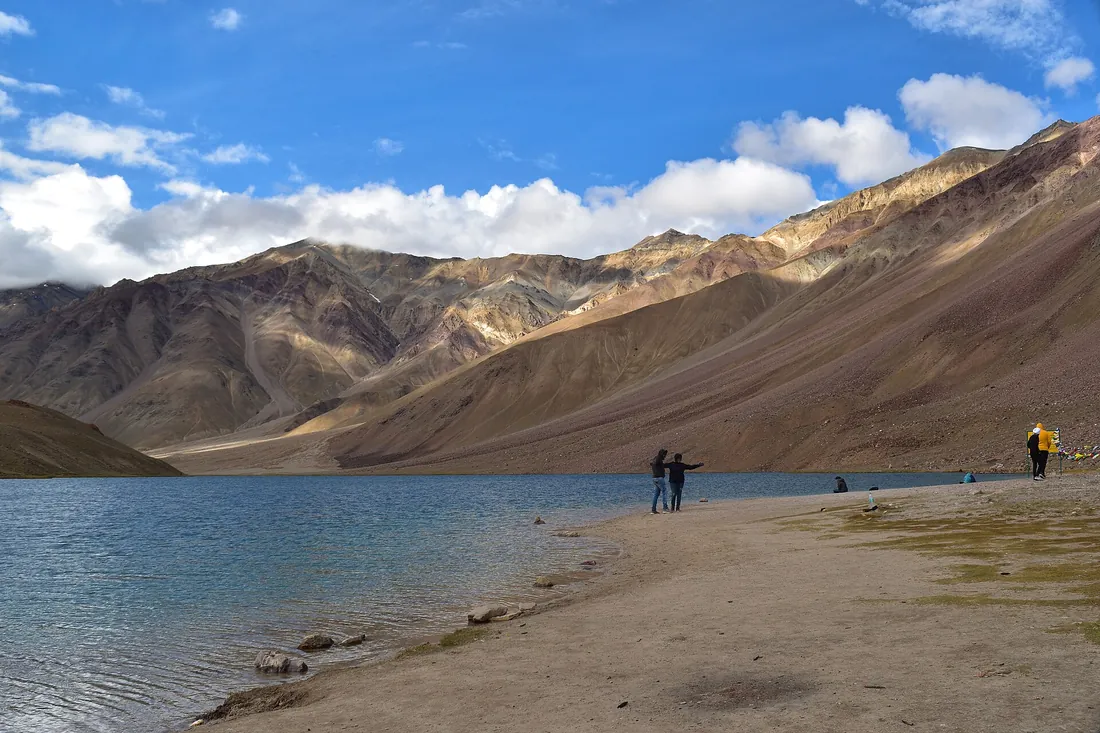
Day 7: Manali to Chandigarh (265 km)
Back down the Kullu valley and through Mandi to Chandigarh, 7–9 hours depending on traffic. If you have time in Manali, see our guide to the Rohtang permit, but most groups are happy just to rest after Spiti.
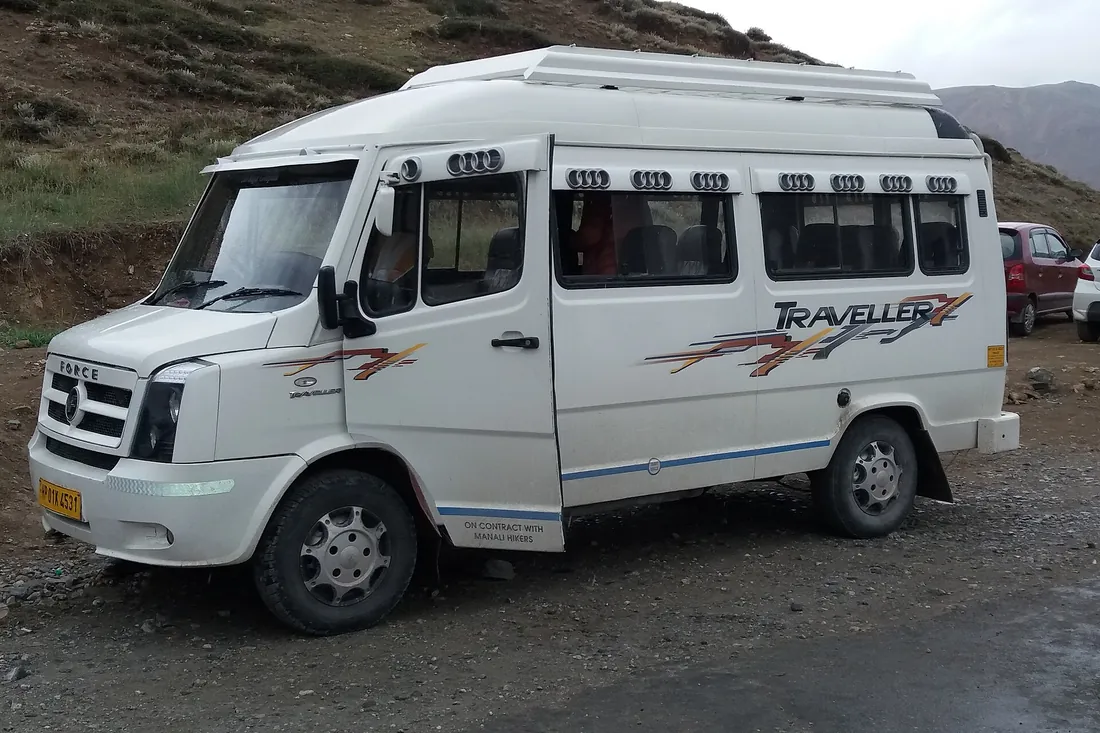
What the Tempo Traveller Costs
Most operators in Chandigarh charge per kilometre for a 12-seater, with a minimum daily distance, plus the driver’s allowance, tolls, state taxes and parking. Hill trips usually cost more per kilometre than plains trips.
My advice: ask for an all-inclusive quote in writing that covers the driver’s food and lodging, tolls, state entry taxes and parking, and confirm the driver has driven the Kunzum and Malling stretches before. An experienced mountain driver matters more than a newer vehicle.
Permits, Fees and Paperwork
| Item | Who needs it | Notes |
|---|---|---|
| Inner Line Permit | Foreigners only, for the stretch near the border | Indian citizens do not need one for this route |
| Spiti eco-zone entry fee | All visitors to Kibber, Pin valley, Chandratal and other eco-sensitive zones | About ₹150 per Indian per day (₹500 for foreigners), introduced in 2025 |
| Himachal entry tax | Vehicles registered outside Himachal | Paid at the state border; your operator usually handles it |
| Rohtang permit | Only if you go up to Rohtang Pass | Not needed for the Atal Tunnel route to Manali |
Plan B: When the Kunzum La Is Closed
From about mid-October to June, snow closes the Kunzum La and the Manali–Kaza road. Spiti is still reachable via Kinnaur, but you must return the same way. A 7-day out-and-back looks like this:
- Day 1Chandigarh → Sarahan or Narkanda.
- Day 2→ Kalpa (acclimatise).
- Day 3→ Nako.
- Day 4→ Tabo → Kaza.
- Day 5Around Kaza (village roads may be snowbound in winter).
- Day 6Kaza → Kalpa or Reckong Peo.
- Day 7→ Chandigarh (a very long day; better split over two days).
In winter, temperatures fall far below freezing, water pipes freeze and many guesthouses close. Travel with an operator who runs winter trips, and expect snow chains and road closures.
Where to Stay
| Night | Place | Typical stays | Typical price (double) |
|---|---|---|---|
| 1 | Sarahan | HPTDC hotel, guesthouses | ₹1,500–3,500 |
| 2 | Kalpa | Hotels and homestays with mountain views | ₹2,000–5,000 |
| 3 | Nako | Homestays and small guesthouses | ₹1,500–3,000 |
| 4–5 | Kaza | Hotels, homestays, hostels | ₹1,500–4,500 |
| 6 | Manali (or Chandratal camps) | Any budget; camps at Chandratal in season | ₹1,500–5,000; camps ₹1,500–3,000 per person |
Altitude and Health
- Go slowly. The Kinnaur route builds in acclimatisation; do not skip the nights at Kalpa and Nako.
- Drink plenty of water and avoid alcohol for the first nights above 3,000 m.
- Know the warning signs: headache, nausea, breathlessness at rest or confusion mean stop climbing; severe symptoms mean descend.
- Carry a basic medical kit and talk to your doctor before the trip, especially with children, older travellers or heart and lung conditions.
- Kaza has a hospital, but facilities are limited and distances are long.
Practical Tips
- Carry cash. ATMs are few after Reckong Peo; Kaza has some, but they can run dry.
- Expect patchy signal. BSNL and Jio work in some towns; long stretches have none. Download maps.
- Fuel up at Reckong Peo and Kaza; there are few pumps in between.
- Start early every day to avoid afternoon landslides and river crossings that swell with snowmelt.
- Pack layers. Even in July, nights at Kaza and Chandratal are close to freezing.
- Respect monasteries and villages: ask before photographing people, and walk clockwise around stupas.
Frequently Asked Questions
Is 7 days enough for Spiti from Chandigarh?
Yes, for the full loop via Kinnaur and Manali, but it is a tight plan with three long driving days. Add one or two days if you can, for rest or bad roads.
Which route is better for Spiti, Shimla or Manali?
Go in via Shimla and Kinnaur and come out via Manali. The Kinnaur side lets you acclimatise slowly, and the Manali side over the Kunzum La is easier once you are used to the altitude.
How much does a tempo traveller from Chandigarh to Spiti cost?
Typically about ₹35,000–55,000 for a 7-day loop in a 12-seater, including driver allowance, tolls and taxes, or roughly ₹3,500–5,500 per person for a group of ten. Get a written all-inclusive quote.
When is the Spiti circuit open?
The full loop is possible when the Kunzum La is open, usually from June to mid-October. The Kinnaur route to Kaza stays open most of the year, apart from landslide and snow closures.
How far is Kaza from Chandigarh?
About 595 km via Shimla, Kinnaur, Nako and Tabo, usually spread over three or four days. Via Manali and the Kunzum La, it is about 450 km but much higher, faster.
Do Indians need a permit for Spiti?
No Inner Line Permit is needed for Indian citizens. Eco-sensitive zones such as Kibber, Pin valley and Chandratal charge an entry fee of about ₹150 per person per day.
Is a tempo traveller safe on the Spiti roads?
Yes, with an experienced mountain driver. Tempo travellers regularly run the route; check the driver has driven the Malling and Kunzum stretches before.
Can I visit Chandratal on the way to Manali?
Yes, in season. The lake is a short detour from the Kunzum La side, about 14 km each way plus a short walk, but it makes day 6 long; many groups camp there for a night.
What is the best month for the Spiti loop?
Late June to early October. July and August bring some rain and river crossings; September is often the clearest month.
Is Spiti suitable for elderly travellers?
It can be, with a slower plan and medical advice. The altitude and long drives are the main challenges; add rest days and avoid the hardest roads if needed.
Final Thoughts
A 7-day Spiti loop from Chandigarh is one of the great Indian road trips: Kinnaur’s apple orchards and gorges, the stone villages of Nako, the thousand-year-old murals of Tabo, the high villages around Kaza, and the wild crossing to Chandratal and Manali. Go clockwise, start early, keep a buffer for landslides, and choose your driver well. For more trip plans, see our India travel itinerary or browse our Travel Itineraries.
Sources: road distances from OpenStreetMap and OSRM routing and heights from SRTM data (checked 26 November 2026); The Tribune on the Spiti eco-sensitive zone entry fees (2025) and NH-5/NH-505 road closures (2026); 2026 Kinnaur and Spiti road status guides; typical 2026 tempo traveller rates from Chandigarh operators. Road conditions change daily; check locally. Photos from Wikimedia Commons, credited in each caption.