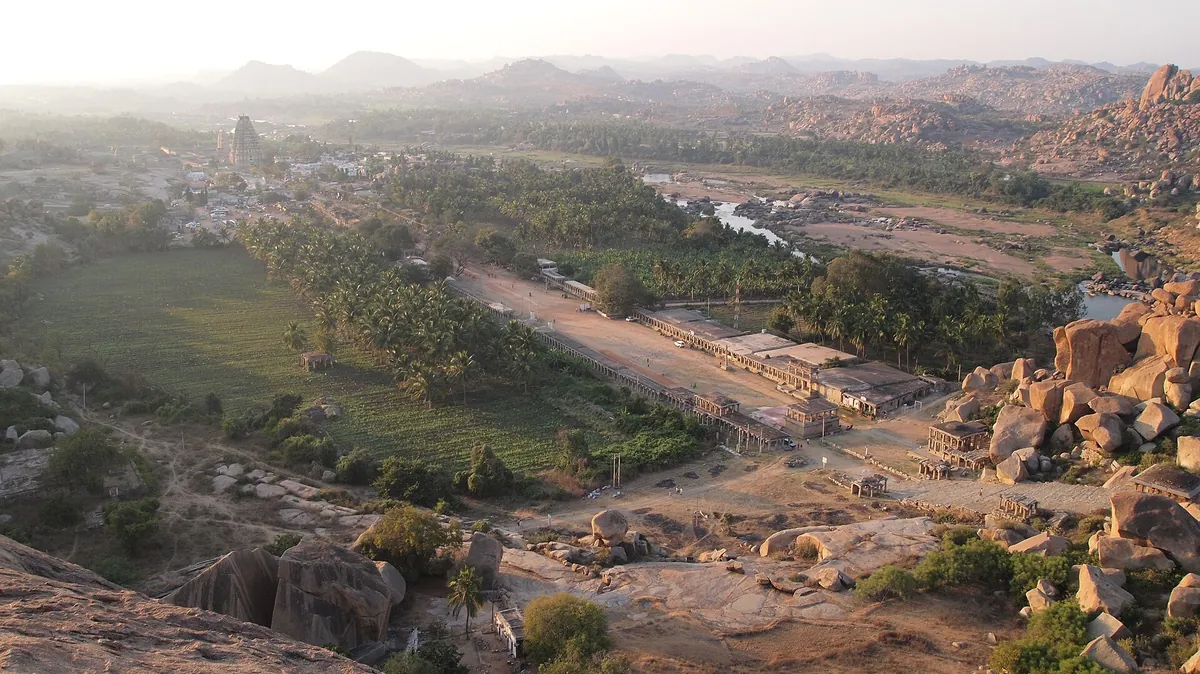
Short answer: stay on the Hampi Bazaar side if you are here for the ruins. You can walk to the Virupaksha temple, Hemakuta hill and the river path to the Vittala temple, and Hosapete’s trains and buses are 12.5 km away. Guesthouses there cost about ₹800–3,000 a night. Stay on the Virupapur Gaddi side, across the Tungabhadra, if you want paddy fields, boulders, cafés and a slower, rural feel, but know two things first. The only quick link is a coracle or boat that stops by about 5:30–6 pm, and the road detour is 25–35 km. Also, most guesthouses on the islet itself were demolished in 2020 after a Supreme Court ruling, so today most stays on that side are in nearby villages such as Sanapur, Hanumanahalli and Anegundi.
I will be honest with you: a lot of “Hippie Island vs Hampi Bazaar” advice online is years out of date. The Virupapur Gaddi of backpacker legend, with dozens of guesthouses in the paddy fields, was largely cleared in 2020 to protect the World Heritage landscape. The north bank is still beautiful and still has places to stay, but they are spread out and you need a scooter. Below I compare the two sides as they are now: access to the ruins, the river crossing, food, prices, atmosphere and who each suits.
Hampi Bazaar vs Virupapur Gaddi at a Glance
| Hampi Bazaar side | Virupapur Gaddi side | |
|---|---|---|
| Feel | Village around the Virupaksha temple, busy by day | Rural: paddy fields, boulders, lakes and cafés |
| Access to ruins | Walk or cycle to the main sites | Ferry across, then walk or rent transport |
| Getting there | 12.5 km from Hosapete; buses and autos | Ferry from Hampi, or a long road detour |
| Stays | Guesthouses and homestays in Hampi village | Spread out in Sanapur, Hanumanahalli and Anegundi |
| Typical price | About ₹800–3,000 a night | About ₹1,000–4,000; resorts higher |
| Food | Simple restaurants and thali places; no alcohol | Cafés and resort restaurants |
| Evenings | Quiet; temple town rules | Quiet and dark; you are stuck if you miss the last boat |
| Best for | History lovers, short stays, families | Slow travellers, climbers, longer stays |
Where Everything Is
The Tungabhadra river splits Hampi in two. The great temples, the royal centre and the bazaar are on the south bank, in Vijayanagara district. Virupapur Gaddi, Sanapur, Anjanadri hill and Anegundi are on the north bank, in Koppal district. The only quick link is the boat crossing just west of the Virupaksha temple.
Staying on the Hampi Bazaar Side
Hampi village grew up around the Virupaksha temple, which is still a working temple, and the long, colonnaded bazaar street in front of it. The old stalls in the bazaar were cleared about 15 years ago, so most guesthouses and restaurants are now in the lanes of the village around the temple. From here you can walk to Hemakuta hill for sunset, follow the river path past Achyutaraya’s temple to the Vittala temple, or cycle to the royal centre.
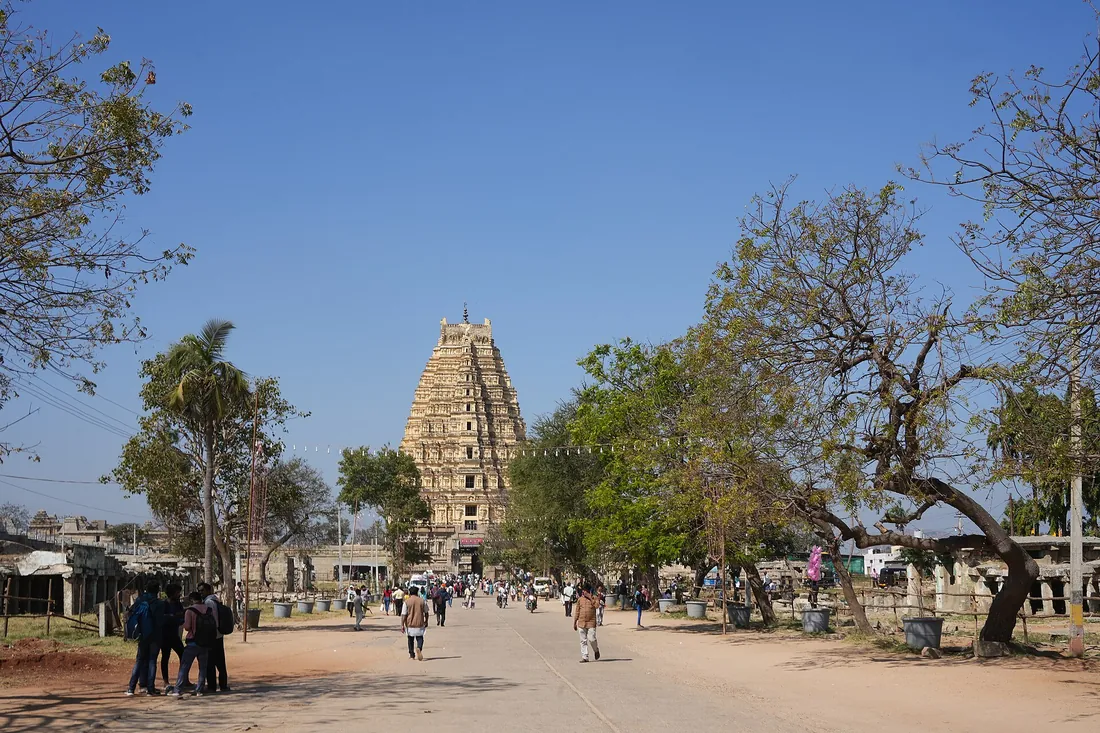
Why people choose it
- The ruins on your doorstep. Sunrise at Matanga hill or Hemakuta, then breakfast, then the temples before the crowds and the heat.
- Easy arrival. Buses and autos run from Hosapete, 12.5 km away, where the trains stop.
- No ferry timetable. You are free to stay out for sunset and dinner.
- Budget-friendly. Simple, clean guesthouses are good value.
What to watch out for
- Temple-town rules. Hampi village is a pilgrimage site: alcohol and meat are generally not served, and restaurants close early.
- Daytime crowds of tour buses at the main temples, especially on weekends.
- Basic rooms. Most places are simple guesthouses; for a pool or bigger hotel, look at Kamalapura or Hosapete.
Staying on the Virupapur Gaddi Side
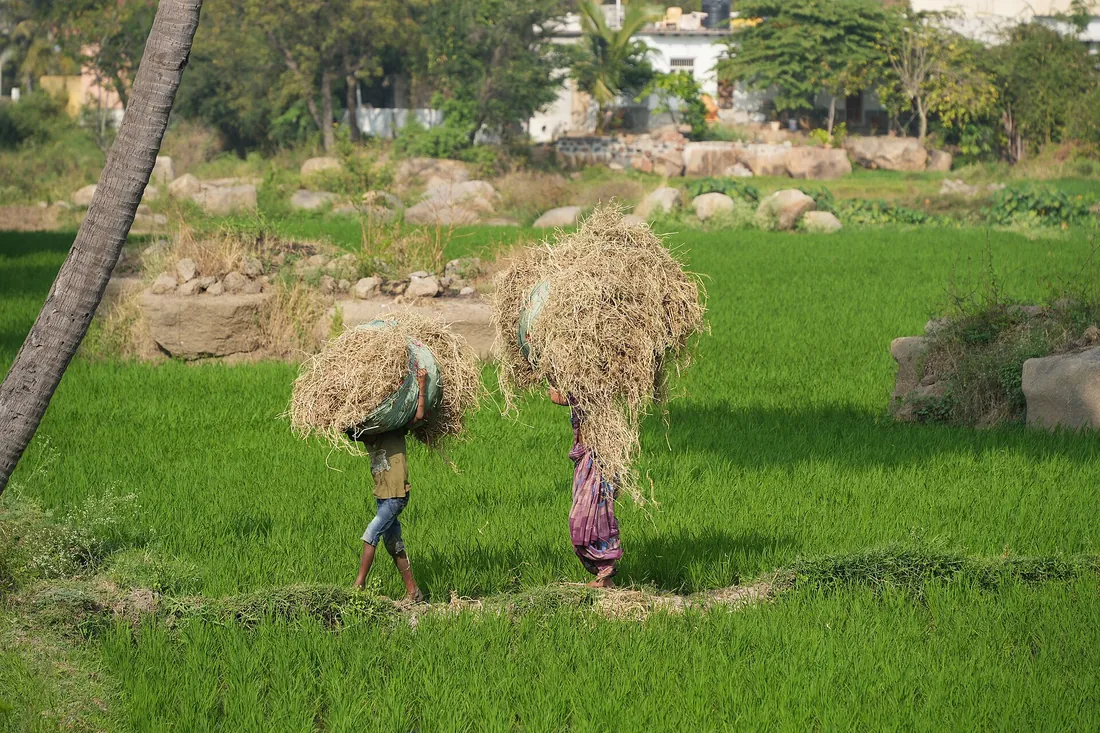
Cross the river and Hampi changes: emerald paddy fields, coconut palms and banana groves between piles of pink granite boulders, with Sanapur lake and Anjanadri hill nearby. For two decades, the islet of Virupapur Gaddi was a famous backpacker hangout with guesthouses, cafés and bouldering. In February 2020, the Supreme Court upheld the order to clear the commercial buildings there because they were inside the protected heritage area, and 19 resorts were demolished soon afterwards.
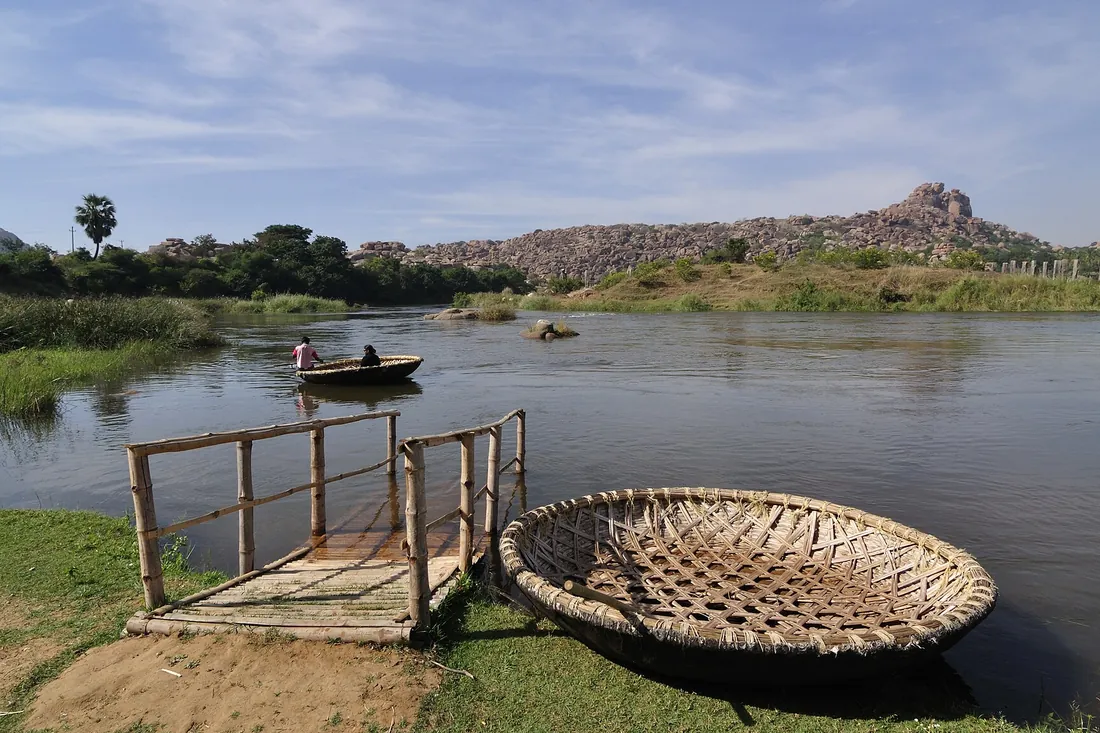
Today, the north-bank scene has spread out to the villages around it, especially Sanapur, Hanumanahalli near Anjanadri hill and Anegundi, the older capital that predates Vijayanagara. You still find cafés, homestays, small resorts and the climbing community, but you need a scooter to get around.
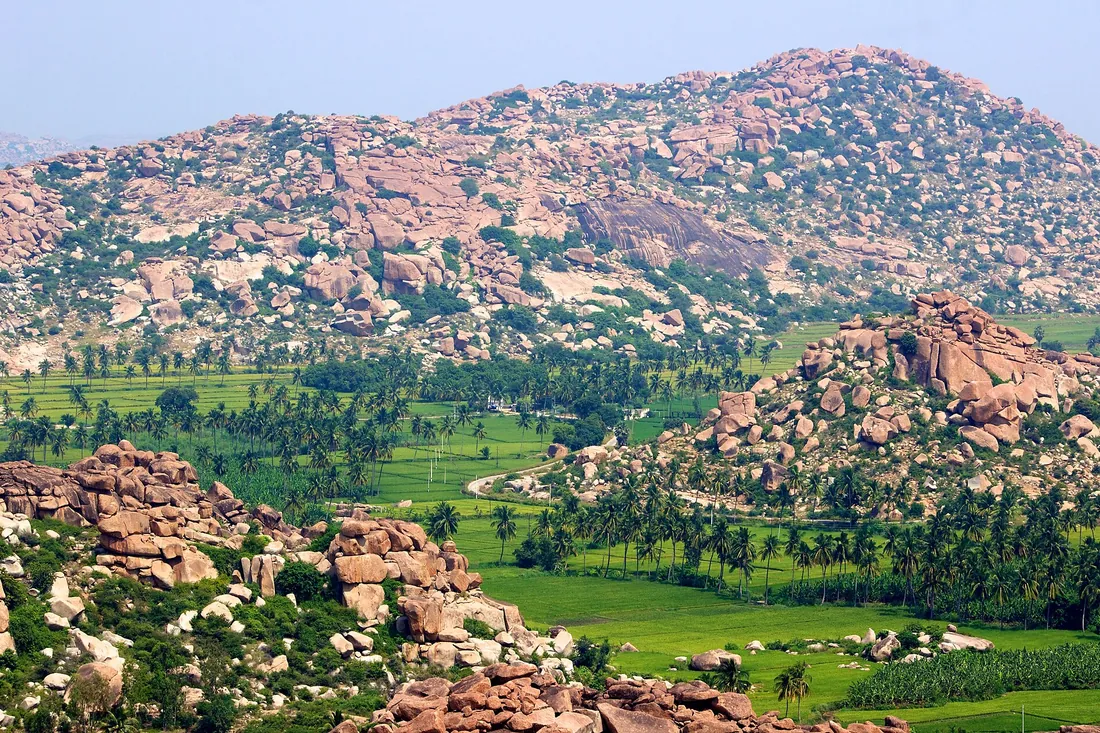
Why people love it
- Countryside and calm. Sunrise over the fields, birdsong, no tour buses.
- Cafés and a traveller vibe, with more international food than the temple village.
- Bouldering among some of the world’s best granite boulders.
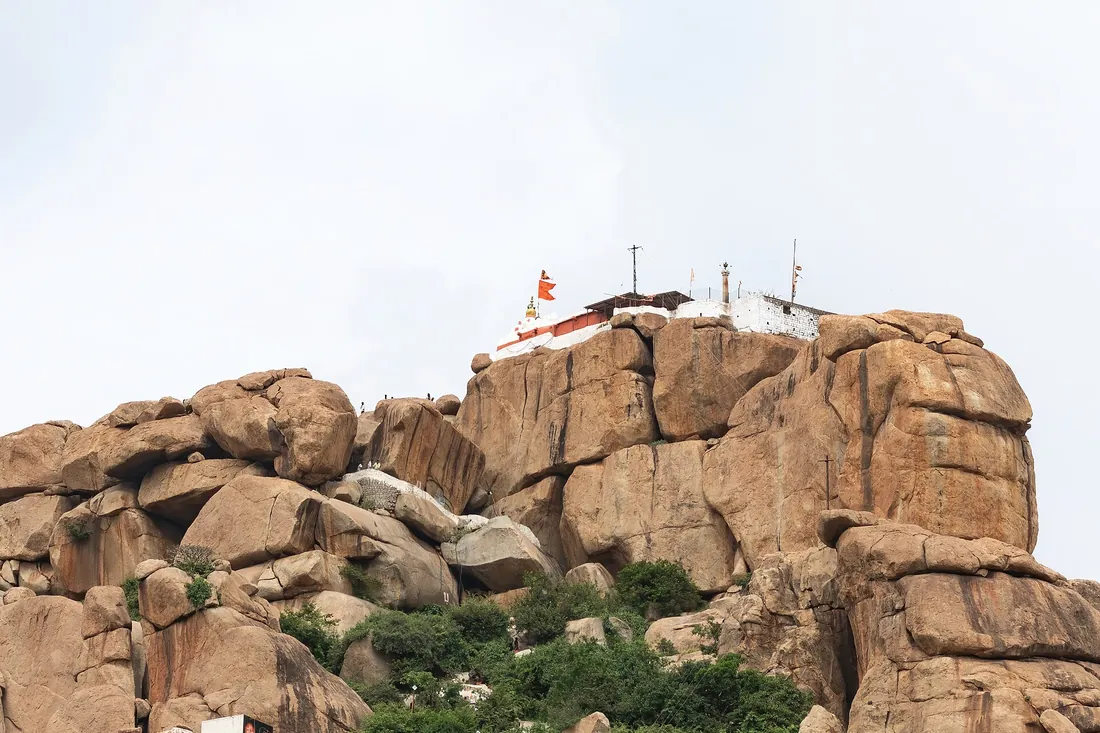
- Sanapur lake and Anjanadri hill, with about 570 steps to the Hanuman temple and one of Hampi’s best sunsets.
What makes it harder
- The ferry stops by about 5:30–6 pm. Miss it and the road back is 25–35 km. It also stops when the river is high in the monsoon.
- You need transport. Stays are scattered; most people rent a scooter.
- Check your stay is legal. Unlicensed guesthouses in the heritage zone can be closed at short notice.
- Getting to the ruins takes longer: the ferry, then walking or hiring a bike on the other side.
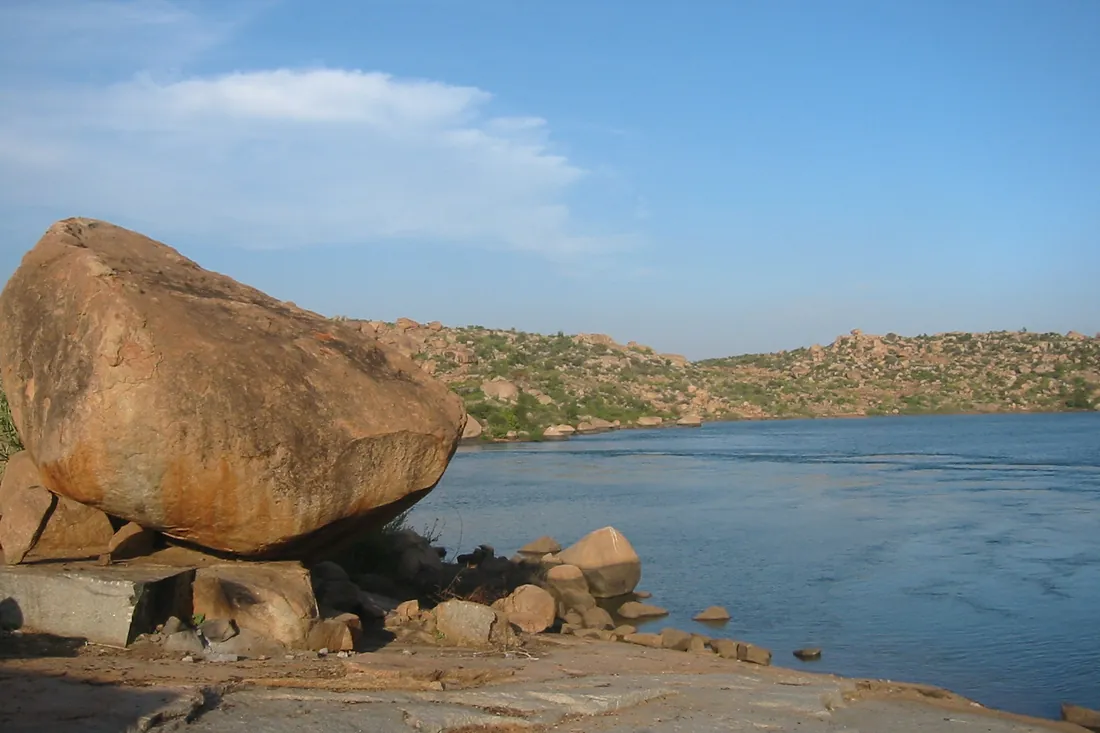
Crossing the River
Coracles, the round bamboo boats, and small motorboats cross the Tungabhadra from a landing just west of the Virupaksha temple. The crossing takes about five minutes. Recent guides report boats from roughly 7:30–8 am until about 5:30–6 pm, at around ₹40–50 a person, with extra for luggage or a bike. Boats stop when the river is high, which can happen for days or weeks in the monsoon.
The Comparison Scorecard
| Hampi Bazaar | North bank (Sanapur, Anegundi) | Kamalapura / Hosapete | |
|---|---|---|---|
| Walk to the main ruins | |||
| Countryside and calm | |||
| Food and café choice | |||
| Easy arrival by train or bus | |||
| Budget rooms | |||
| Bigger hotels and pools | |||
| Freedom in the evening |
My advice: on a two- or three-day trip focused on the monuments, stay on the Hampi Bazaar side. With four days or more, split your stay: two nights near the bazaar for the ruins, then two nights across the river in Sanapur or Anegundi to slow down. Families and anyone who wants a pool or larger hotel should look at Kamalapura, 3.3 km south, or Hosapete.
What Rooms Cost
Getting There and Around
| Trip | Distance | Approx. cost | Time |
|---|---|---|---|
| Hosapete station → Hampi Bazaar | 12.5 km | Bus about ₹20–30; auto about ₹200–300 | 25–40 min |
| Hampi Bazaar → north bank (by boat) | River crossing | About ₹40–50 a person | 5 min |
| Hampi Bazaar → north bank (by road) | 25–35 km | Auto or taxi, about ₹800–1,500 | 45 min–1 hr |
| Hampi Bazaar → Vittala temple | ≈2 km on foot | Free on foot; battery cars from the parking | 30–40 min walk |
| Hampi Bazaar → Kamalapura | 3.3 km | Auto about ₹100 | 10 min |
| Virupapur Gaddi → Sanapur lake | 6.4 km | Scooter rental about ₹300–500 a day | 15 min |
Hosapete (Hospet) Junction is the railhead, with trains from Bengaluru, Hyderabad and Goa, and overnight buses from Bengaluru stop there too. If you are coming from Bengaluru, Hampi pairs well with a night in the hills on the way; see our guide to unexplored hill stations near Bangalore, and if you are continuing south to the coast, our guide to where to stay in Varkala.
A Day from Each Base
- 6:00 amBazaar side: sunrise on Matanga or Hemakuta hill. North bank: sunrise over the paddy fields.
- 8:00 amBreakfast. The first boats cross at about 7:30–8 am.
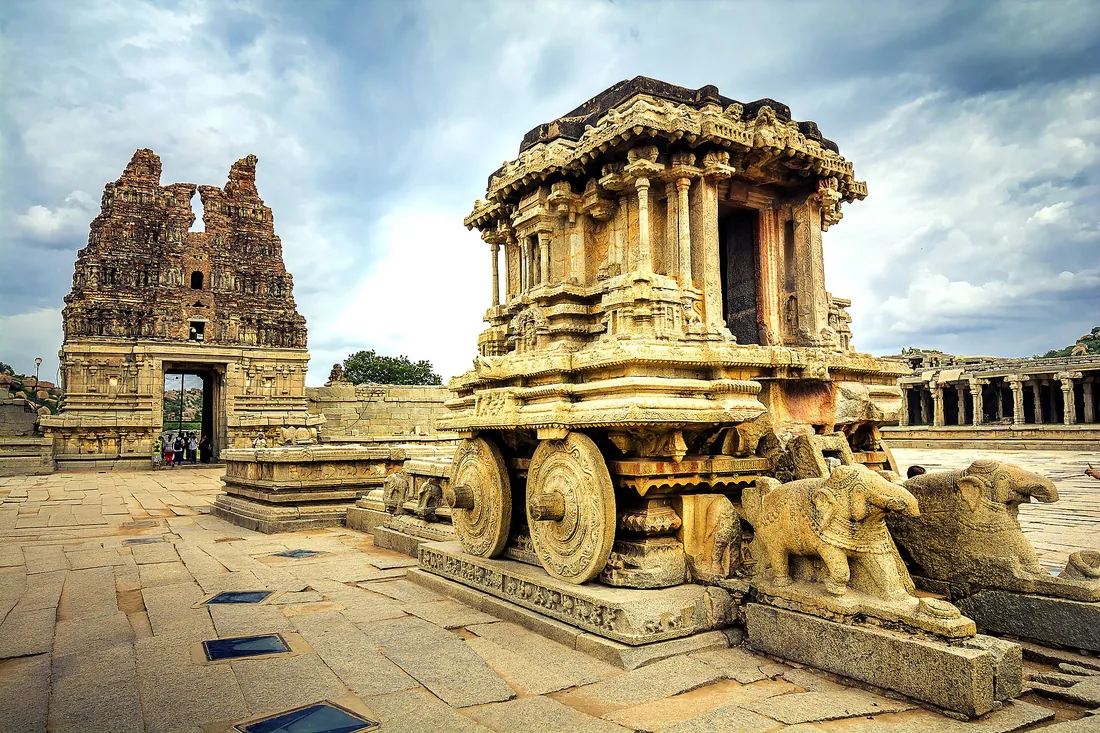
- 9:00 amThe Virupaksha temple, then the river path to the Vittala temple and its stone chariot.
- 1:00 pmLunch and a rest out of the heat.
- 4:00 pmNorth bank: cross back before the last boat, then Anjanadri hill for sunset. Bazaar side: the royal centre by bike.
- 6:30 pmDinner. Bazaar-side restaurants close early; north-bank cafés stay open later.
Best Time to Visit
| Season | What it is like | Stay tip |
|---|---|---|
| October–February | Pleasant days, cool mornings; peak season. | Book ahead, especially for Christmas, New Year and the Hampi Utsav. |
| March–May | Very hot, often above 38°C; few visitors. | Stay near the ruins and sightsee only early and late. |
| June–September | Monsoon: green fields, but the river can rise and boats stop. | Stay on the Hampi Bazaar side; check the ferry daily. |
Practical Tips
- Respect the temple town. Dress modestly around the Virupaksha temple, and do not expect alcohol on the bazaar side.
- Check the ferry before you book the north bank, especially from June to October.
- Carry a torch. Lanes on both sides are dark at night.
- Rent a bicycle or scooter with a helmet; the monuments are spread over a large area.
- Buy the combined ticket for the Vittala temple; it also covers the Lotus Mahal and the Elephant Stables.
- Stay legal. Ask whether your guesthouse is licensed; Hampi’s heritage rules are enforced.
Frequently Asked Questions
Is it better to stay in Hampi Bazaar or Virupapur Gaddi?
Hampi Bazaar is better if you are visiting the ruins, because the main sites are within walking distance and there is no ferry timetable to worry about. The Virupapur Gaddi side is better for countryside, cafés and a slower stay, but you need a scooter and must plan around the last boat.
Are there still guesthouses on Hippie Island in Hampi?
Very few on the islet itself. Most commercial buildings at Virupapur Gaddi were demolished in 2020 after the Supreme Court upheld the order to clear them. Today most north-bank stays are in nearby villages such as Sanapur, Hanumanahalli and Anegundi.
What time is the last ferry from Hampi to Virupapur Gaddi?
Usually around 5:30–6 pm, according to recent guides, with the first boats at about 7:30–8 am. Times vary, and boats stop when the river is high, so check on the day.
How much is the coracle ride across the Tungabhadra?
Recent guides report about ₹40–50 a person for the short crossing, with extra charges for luggage or a bike.
Is there a bridge between Hampi and Virupapur Gaddi?
No road bridge nearby. By road, the detour between the two banks is about 25–35 km, roughly 45 minutes to an hour.
How far is Hampi from Hosapete station?
About 12.5 km. Buses and autos run between Hosapete and Hampi Bazaar, taking about 25–40 minutes.
Can you drink alcohol in Hampi Bazaar?
Generally no. Hampi village is a temple town, and restaurants there do not usually serve alcohol or meat. Some places on the north bank and in Hosapete do.
Where should families stay in Hampi?
The Hampi Bazaar side for easy access to the ruins, or Kamalapura and Hosapete for bigger hotels with pools and parking.
What is the best time to visit Hampi?
October to February, when the weather is pleasant. March to May is very hot, and in the monsoon the river can rise and stop the boats.
How many days do you need in Hampi?
Two full days for the main monuments, three for a relaxed pace, and four or more if you want to stay on both sides of the river.
Final Thoughts
Hampi Bazaar puts you among the temples, with sunrise on the hills and the ruins a walk away. The north bank gives you the Hampi of paddy fields, boulders and quiet cafés, but it is no longer the guesthouse-packed island it once was, and you live by the last boat. For most people, the answer is the bazaar side for the monuments, with a night or two across the river if time allows. For more trips in the region, see our guide to the best places to visit in South India, our best places to visit in India, or plan a route with our India travel itinerary.
Sources: road distances from OpenStreetMap and OSRM routing (checked 26 November 2026); Supreme Court of India judgment of 11 February 2020 on Virupapura Gaddi and reports on the subsequent demolitions (Deccan Herald, The Hindu, LiveLaw); Incredible India and Outlook Traveller on coracle crossings; recent Hampi travel guides (2025–2026) on ferry times, fares and stays. Room rates are typical online listings. Photos from Wikimedia Commons, credited in each caption.