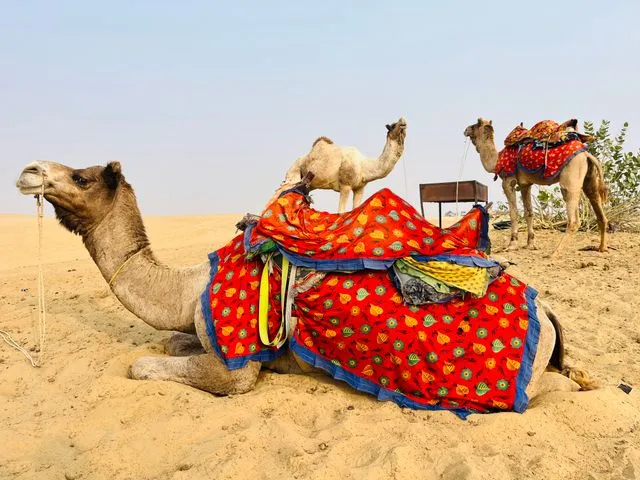
The best time to visit Rajasthan is October to March, and most first-time visitors need 7 to 10 days to see the classic circuit of Jaipur, Jodhpur, Jaisalmer and Udaipur. This Rajasthan travel guide tells you where to go, how long to stay, how to get between cities, what entry tickets and daily costs look like, and what to know before you travel. Prices and dates were checked on 15 November 2026, so always confirm fees on the official portals before you go.
Quick answer: planning Rajasthan in one minute
- Best time: October to March. November to February is the most comfortable, but also the busiest and most expensive.
- How many days: 7 days for Jaipur, Jodhpur and Udaipur. 10 days if you add Jaisalmer. 14 days for the full state.
- Best route for first-timers: Jaipur, then Jodhpur, then Jaisalmer, then Udaipur (or the reverse).
- Daily budget per person: about ₹2,000–₹3,500 (budget), ₹6,500–₹12,000 (mid-range) or ₹25,000–₹65,000+ (luxury). These are planning estimates, not fixed prices.
- Avoid: April to June. Desert towns are extremely hot.
- Book early: trains, tiger safaris and winter hotels fill up months ahead.
Rajasthan sits in north-west India and is known for its forts, palaces, desert dunes, lakes and tiger reserves. If you are still choosing a destination, our guide to the best places to visit in India shows how Rajasthan compares with the rest of the country. If you have already picked Rajasthan, read on.
Rajasthan Travel Guide at a Glance: Essential Information
| Detail | What to know |
|---|---|
| Capital | Jaipur |
| Location | North-western India |
| Best time to visit | October to March |
| Ideal trip length | 7–10 days (14 days for an extended trip) |
| Classic circuit | Jaipur, Jodhpur, Jaisalmer, Udaipur |
| Main airports | Jaipur (JAI), Udaipur (UDR), Jodhpur (JDH). Jaisalmer and Bikaner have seasonal winter flights. |
| Delhi to Jaipur | About 4.5–5 hours by road or about 4 hours 15 minutes by Vande Bharat or Shatabdi train |
| Payments | Indian rupees (₹). UPI is widely used, but carry cash for small towns and markets. |
| UNESCO sites | Four listings (see table below) |
| Daily budget | ₹2,000 to ₹65,000+ per person, depending on travel style |
UNESCO World Heritage Sites in Rajasthan
| Site | Type | Year listed | What it covers |
|---|---|---|---|
| Keoladeo National Park | Natural | 1985 | Bharatpur wetland bird sanctuary |
| The Jantar Mantar, Jaipur | Cultural | 2010 | 18th-century astronomical observatory |
| Hill Forts of Rajasthan | Cultural | 2013 | Six forts: Chittorgarh, Kumbhalgarh, Ranthambore, Gagron, Amer and Jaisalmer |
| Jaipur City, Rajasthan | Cultural | 2019 | The historic walled Pink City |
Rajasthan is also one of India’s most popular states for visitors from abroad. In 2025 it welcomed about 1.95 million foreign tourists, placing it sixth among Indian states. Domestic travel is far bigger: the state recorded 10.92 crore (109.2 million) tourist visits between January and June 2026 alone.
Foreign tourist arrivals by Indian state, 2025 (millions)
Source: Ministry of Tourism and Rajasthan Tourism data via CEIC reports, checked 15 November 2026. Rajasthan’s own foreign arrivals fell about 6% from 2,072,407 (2024) to 1,945,068 (2025).
Best Time to Visit Rajasthan: Month-by-Month Weather Guide
Winter is the best overall season. Rajasthan Tourism says summer temperatures can reach 48°C, while winter days are mild and dry. The right month also depends on where you are going. The desert west (Jodhpur, Jaisalmer, Bikaner) is much hotter than the Aravalli hills around Udaipur and Mount Abu.
Winter (November to February): best overall
Days are sunny and comfortable at about 22–29°C. Desert nights are cold, dropping to about 5–7°C in December and January, and sometimes lower. This is the best time for all four main cities and for desert camps. It is also peak season, so expect higher hotel prices and crowds, especially around Christmas and New Year (20 December to 5 January) and the wedding season. If you are comparing other cool-season trips, see our list of places to visit in India in winter.
Summer (March to June): is it worth it?
For most people, no. Average highs reach 37–42°C from April, and heatwaves in the Thar districts can pass 45°C. Phalodi holds India’s record of 51.0°C. If you must travel, head to Mount Abu, which is 8–10°C cooler than the plains, start sightseeing at sunrise and rest indoors from late morning to late afternoon. Check heat alerts on the India Meteorological Department website.
Monsoon (July to September): a quieter, greener side
Rain turns the Aravalli hills green and fills the lakes around Udaipur and Mount Abu. Hotel prices drop and crowds thin out. The downsides are humidity, heavy showers and closed core zones at Ranthambore (zones 1–5 close from July to September).
October and March: the shoulder months
Afternoons are warm at about 31–36°C, but mornings and evenings are pleasant. Rates are slightly lower than in peak season. October is a good choice if you want winter-like sightseeing with fewer crowds, though desert afternoons can still feel hot.
Rajasthan month-by-month suitability by region
| Region | Jan | Feb | Mar | Apr | May | Jun | Jul | Aug | Sep | Oct | Nov | Dec |
|---|---|---|---|---|---|---|---|---|---|---|---|---|
| Jaipur | Great | Great | Good | Avoid | Avoid | Avoid | Fair | Fair | Good | Great | Great | Great |
| Jodhpur & Jaisalmer | Great | Great | Good | Avoid | Avoid | Avoid | Avoid | Avoid | Fair | Good | Great | Great |
| Udaipur | Great | Great | Good | Fair | Avoid | Avoid | Good | Good | Great | Great | Great | Great |
| Ranthambore | Great | Great | Great | Good | Hot | Hot | Closed* | Closed* | Closed* | Good | Great | Great |
| Mount Abu | Cold | Good | Great | Good | Good | Fair | Wet | Wet | Good | Great | Great | Cold |
*Ranthambore core zones 1–5 close July to September; buffer zones 6–10 stay open. Ratings based on India Meteorological Department normals and safari opening dates, checked 15 November 2026.
Temperature by month: Jaipur, Jodhpur and Jaisalmer
| Month | Jaipur max / min (°C) | Jodhpur max / min (°C) | Jaisalmer max / min (°C) |
|---|---|---|---|
| January | 22.6 / 8.6 | 24.5 / 9.6 | 23.8 / 7.4 |
| February | 25.7 / 11.4 | 27.4 / 11.7 | 27.3 / 10.8 |
| March | 31.6 / 16.8 | 33.4 / 17.3 | 33.3 / 18.1 |
| April | 37.4 / 22.2 | 38.4 / 22.6 | 39.1 / 21.8 |
| May | 40.7 / 26.5 | 41.2 / 26.5 | 41.9 / 24.8 |
| June | 39.6 / 27.7 | 40.0 / 27.8 | 40.9 / 25.8 |
| July | 34.6 / 26.1 | 35.2 / 26.4 | 38.1 / 25.3 |
| August | 32.7 / 24.8 | 33.5 / 25.4 | 36.6 / 25.0 |
| September | 34.2 / 23.6 | 34.9 / 23.9 | 37.1 / 24.2 |
| October | 33.8 / 19.6 | 35.8 / 20.1 | 36.5 / 19.4 |
| November | 29.3 / 14.0 | 31.2 / 14.7 | 31.3 / 14.0 |
| December | 24.5 / 9.5 | 26.9 / 11.2 | 25.4 / 8.8 |
Monthly rainfall (mm): Jaipur vs Jaisalmer
Jaipur peaks at 203 mm in August; Jaisalmer at 94 mm. Source: India Meteorological Department long-term normals (1981–2010), checked 15 November 2026.
How Many Days Do You Need to Explore Rajasthan?
Seven days is the minimum for a first trip, and 10 days is more comfortable. Rajasthan is large and many cities are 5 to 7 hours apart by road, so trying to cover the whole state in 5 to 7 days means spending most of your trip in a car.
| Trip length | Recommended destinations |
|---|---|
| 3–4 days | Jaipur and nearby attractions |
| 5 days | Jaipur, Pushkar and Ranthambore (pick Pushkar or Ranthambore, not both, unless you skip a day in Jaipur) |
| 7 days | Jaipur, Jodhpur and Udaipur |
| 10 days | Jaipur, Jodhpur, Jaisalmer and Udaipur |
| 14 days | Grand circuit with Pushkar, Bikaner, Kumbhalgarh, Ranakpur and more |
To avoid wasted time, limit yourself to one new base every two nights, and keep long drives for days with few sights planned.
Top Places to Visit in Rajasthan by Region
We cover 20 places, grouped into four regions. Our list leans towards forts and palaces, but includes spiritual towns, wildlife and quieter heritage stops.
Our 20 places by main experience
- Forts and palaces: 7 (35%)
- Spiritual: 4 (20%)
- Wildlife and nature: 3 (15%)
- Offbeat heritage: 3 (15%)
- Lakes and hills: 2 (10%)
- Desert dunes: 1 (5%)
Based on the 20-place list in this guide.
Top destinations compared
| Destination | Main attraction | Stay | Best for |
|---|---|---|---|
| Jaipur | Amer Fort, City Palace, Hawa Mahal | 2–3 days | First-timers, families, shopping |
| Jodhpur | Mehrangarh Fort, blue old city | 2 days | Forts, photography |
| Jaisalmer | Living fort, Sam and Khuri dunes | 2 days | Desert, couples |
| Udaipur | City Palace, Lake Pichola | 2–3 days | Couples, lakes, views |
| Ranthambore | Tiger safari, fort | 2 days | Wildlife |
| Pushkar | Sacred lake, Brahma Temple | 1–2 days | Culture, slow travel, budget |
| Bikaner | Junagarh Fort, camel research centre | 1–2 days | Offbeat history |
| Mount Abu | Dilwara Temples, Nakki Lake | 2 days | Cool weather, families |
Jaipur and Eastern Rajasthan
1. Jaipur: the Pink City
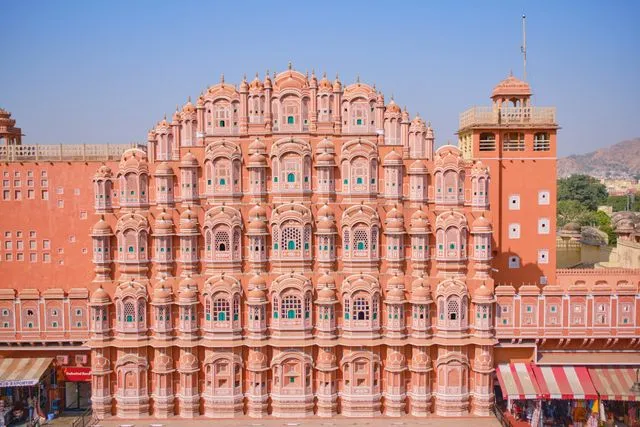
Jaipur is the usual starting point. Its walled city is a UNESCO site (2019) and Jantar Mantar is listed separately. Top sights are Hawa Mahal, City Palace, Jantar Mantar, Nahargarh Fort and Albert Hall Museum, plus the bazaars for textiles and handicrafts. Allow 2–3 days. Be firm with touts who push gem and textile shops near Johari Bazaar and Hawa Mahal.
2. Amer Fort and Jaigarh Fort
Amer Fort sits 11 km north of Jaipur and is part of the Hill Forts of Rajasthan UNESCO listing. Expect Rajput courtyards, palace rooms and steep ramps. Jaigarh Fort, above it, has the Jaivana cannon and charges a separate ticket. Arrive by 8:00 am to beat the tour buses and allow half a day.

3. Ranthambore National Park
Ranthambore is one of India’s best-known places to look for Bengal tigers, with a UNESCO-listed fort inside the park. Safari zones close on set weekdays and the core zones close from July to September. Sightings are never guaranteed, so book at least two safaris and reserve permits months ahead through the official Rajasthan Forest Department portal. It is 130–165 km from Jaipur (2.5–3 hours). For other reserves to compare, see our guide to the best wildlife safaris in India.

4. Keoladeo National Park, Bharatpur
This UNESCO wetland covers 28.7 sq km and has recorded about 375 bird species. No motor vehicles are allowed, so explore on foot, by hired bicycle (about ₹100 a day) or by cycle-rickshaw. November to February is best for migratory birds. It is a handy stop on the Jaipur–Agra road, about 3 hours from Jaipur. Allow half a day to one day.
5. Abhaneri (Chand Baori)
Chand Baori is a 9th-century stepwell with 13 storeys and about 3,500 narrow steps. It lies 95 km east of Jaipur (around 1.5 hours) on the Agra highway, so it works as a stop between the two cities. The ASI ticket is ₹40 for Indian visitors and ₹600 for foreign visitors.
Mewar and Southern Rajasthan
6. Udaipur: the City of Lakes
Udaipur is built around Lake Pichola and Fateh Sagar Lake, with the City Palace overlooking the water. Also see Jag Mandir, Saheliyon Ki Bari and Sajjangarh (Monsoon Palace) for sunset views. Allow 2–3 days. Old-town lanes around Gangaur Ghat are too narrow for cars, and hotel rates rise during the wedding season from November to February.

7. Kumbhalgarh Fort
A UNESCO hill fort with a 36 km perimeter wall and the Badal Mahal at the top. It is 84–85 km (about 2 hours) from Udaipur, so it makes a one-day trip. Expect a steep climb and winding single-lane roads. A sound and light show runs at 6:45 pm.
8. Ranakpur Jain Temples
The 15th-century Chaumukha Temple is carved in white marble and has 1,444 different pillars. Non-Jain visitors can usually enter from about 12:00 pm to 5:00 pm. Entry is free with a small camera fee. Cover your shoulders and knees, and leave leather belts and bags outside. It sits about 90 km from Udaipur, so it fits neatly on the Udaipur–Jodhpur drive.
9. Chittorgarh Fort
Spread over about 700 acres, Chittorgarh is described as the largest fort in India. Look for Vijay Stambh and Kirti Stambh. It is 115 km (about 2 hours) from Udaipur. The site is too big to walk, so hire an auto-rickshaw or keep your car inside the fort.
10. Mount Abu
Rajasthan’s only hill station sits at about 1,220 m. Visit Nakki Lake, the Dilwara Jain Temples (open to tourists about 12:00 pm to 5:00 pm, no phones or cameras) and Guru Shikhar. The nearest station is Abu Road, 28 km away, and Udaipur is 165–190 km (about 3 hours). For more cool-weather options, read our guide to the best hill stations in India.
Marwar and the Thar Desert
11. Jodhpur: the Blue City
Mehrangarh Fort rises above the blue-painted old city. Also visit Jaswant Thada, Umaid Bhawan Palace Museum, and the Clock Tower and Sardar Market. Allow 2 days. The fort has a lift to the upper ramparts, but courtyards have uneven stone steps, and lanes near Sardar Market get congested.

12. Jaisalmer: the Golden City
Jaisalmer Fort is a living yellow-sandstone citadel and part of the Hill Forts UNESCO listing. The alleyways are free and open around the clock, while the Palace Museum charges entry. Add Patwon Ki Haveli, Nathmal Ki Haveli and Gadisar Lake. Allow 2 days, one for the town and one for the desert. To reduce pressure on the fort’s old drains and walls, stay in a heritage hotel outside the fort walls.
13. Sam and Khuri sand dunes
These are the main places for camel rides, jeep safaris, sunsets and overnight desert camps. Sam is 42–50 km from Jaisalmer and is busy and commercial. Khuri is 45–50 km away and is quieter. Camp packages typically cost ₹2,500–₹15,000+ a night. Important rule: in October 2026 the Rajasthan Forest Department banned tourist entry, camel safaris and vehicles on the designated Sam and Kanoi dunes after sunset, and banned laser lights at camp shows. Confirm that this still applies on your dates before you book.

14. Bikaner
Bikaner is a good, less crowded desert stop. See Junagarh Fort, the Rampuria Havelis and the National Research Centre on Camel, and take a trip to Karni Mata Temple in Deshnoke, 30 km south. It is 330 km from Jaipur (about 5.5 hours) and about 5 hours from Jaisalmer, so plan for long road legs.
Central and Offbeat Rajasthan
15. Pushkar
Pushkar has a sacred lake with 52 ghats, the Brahma Temple and the annual Pushkar Camel Fair. The town is vegetarian and alcohol-free. Remove your shoes at the ghats and do not photograph people bathing. Politely refuse unrequested “puja” flower offerings, which are a common donation scam. Allow 1–2 days (3 during the fair).
16. Ajmer
Ajmer is home to Ajmer Sharif Dargah and Ana Sagar Lake. Entry to the dargah is free, but you must cover your head, remove shoes and dress modestly. Keep valuables to a minimum in the dense crowds. Ajmer Junction is the main rail gateway for Pushkar, 14–15 km away, and the two fit together in one day.
17. Bundi
A quiet small town with Taragarh Fort, Garh Palace murals and Raniji ki Baori stepwell (ASI ticket ₹40 for Indian visitors, ₹600 for foreign visitors). It is 210 km from Jaipur (about 3.5 hours). Watch for bold langur monkeys at the fort.
18. Mandawa and Shekhawati
Shekhawati is an open-air gallery of painted merchant havelis. Individual havelis charge ₹50–₹200, but many are privately owned with irregular opening hours. It is 170 km from Jaipur (about 3 hours) and 255 km from Delhi (about 5 hours). One day is enough.
19. Nathdwara and Eklingji
These two temple towns lie north of Udaipur: Shrinathji Temple in Nathdwara (48 km) and the 8th-century Eklingji Temple (22–40 km). Entry is free, darshan times are strict, and phones, cameras and leather items are not allowed inside.
20. Sariska Tiger Reserve
Sariska is an Aravalli tiger reserve 110 km from Jaipur (about 2 hours) and 200 km from Delhi (about 4 hours). It is open from October to June (buffer zones stay open all year) and closed on Wednesdays. It is a useful alternative if Ranthambore permits are sold out.
Monument Entry Fees and Timings in Rajasthan
Fees differ for Indian and foreign visitors and several sources disagree, because state monuments revised their prices in 2026. The table shows the range quoted by 2026 sources. Check the official ticket portal before you go, as some counters and websites still show older prices.
| Attraction | Hours | Indian visitors | Foreign visitors |
|---|---|---|---|
| Amer Fort | 8:00 am–5:30 pm | ₹100–₹200 | ₹500–₹1,000 |
| Hawa Mahal | 9:00 am–5:00 pm | ₹50–₹100 | ₹200–₹600 |
| Jantar Mantar | 9:00 am–4:30 pm | ₹50–₹100 | ₹200–₹600 |
| City Palace, Jaipur | 9:30 am–5:00 pm | ₹200–₹300 | ₹700+ |
| Mehrangarh Fort, Jodhpur | 9:00 am–5:00 pm | ₹100–₹200 | ₹600–₹800 |
| City Palace Museum, Udaipur | 9:00/9:30 am–5:00 pm | ₹300–₹400 | ₹400–₹600 |
| Jaisalmer Fort Palace Museum | 9:00 am–6:00 pm | ₹100 | ₹500 |
| Junagarh Fort, Bikaner | 10:00 am–4:30 pm | ₹50 | ₹300 |
| Kumbhalgarh Fort | 9:00 am–6:00 pm | ₹40 | ₹600 |
| Chittorgarh Fort | 9:00 am–6:00 pm | ₹40–₹50 | ₹200–₹600 |
| Keoladeo National Park | Sunrise to sunset | ₹165–₹175 | ₹1,010–₹1,056 |
Indian vs foreign entry fees: highest rate quoted (₹)
Highest rate quoted by 2026 sources, checked 15 November 2026. Verify on the official portals before travel.
Composite tickets and tourist passes
If you plan to visit several Jaipur state monuments, a composite ticket is usually cheaper than buying separately. It covers Amer Fort, Hawa Mahal, Jantar Mantar, Albert Hall and Nahargarh Fort. Reported prices are ₹550 for Indian visitors (₹180 for students) and ₹1,700 for foreign visitors (₹800 for students). City Palace is run by a private trust and is not included. Buy tickets on the Rajasthan Tourist Ticket Portal.
Closures and ticket rules
- State monuments close on Dhulandi (the main day of Holi), which falls on 22 March 2027.
- Rajasthan Day (30 March) is reported to bring free entry to state monuments. Check this closer to the date.
- Monuments run by the Archaeological Survey of India (such as Kumbhalgarh, Chittorgarh and Abhaneri) are usually ₹40 for Indian, SAARC, BIMSTEC and OCI visitors and ₹600 for other foreign nationals. Buy these tickets on the ASI website.
- Many sites charge extra for cameras, lifts, audio guides and guides. Last entry is usually 30 minutes to an hour before closing.
Best Rajasthan Itineraries (5, 7, 10 and 14 Days)
All four plans use the road times in the distance table later in this guide. They are for first-time visitors. For a wider route that also covers Delhi and Agra, see our India travel itinerary.
5-day Rajasthan itinerary
| Day | Plan |
|---|---|
| Day 1 | Arrive in Jaipur. Explore the Pink City and bazaars. |
| Day 2 | Amer Fort, Jaigarh, City Palace and Hawa Mahal. |
| Day 3 | Drive to Pushkar (about 2.5 hours). Lake and ghats at sunset. |
| Day 4 | Pushkar and Ajmer Sharif Dargah. |
| Day 5 | Return to Jaipur or travel onward. |
Wildlife swap: replace Pushkar with Ranthambore for two safaris.
7-day Rajasthan itinerary
| Day | Plan |
|---|---|
| Days 1–2 | Jaipur: Amer Fort, City Palace, Jantar Mantar, markets. |
| Day 3 | Drive to Jodhpur (5.5–6 hours). Evening in the old city. |
| Day 4 | Mehrangarh Fort, Jaswant Thada, Sardar Market. |
| Day 5 | Drive to Udaipur via Ranakpur (5–6 hours plus temple stop). |
| Days 6–7 | Udaipur: City Palace, Lake Pichola, Saheliyon Ki Bari, sunset views. Depart. |
10-day Rajasthan itinerary
| Day | Plan |
|---|---|
| Days 1–2 | Jaipur. |
| Day 3 | Jaipur to Jodhpur (5.5–6 hours). Mehrangarh Fort. |
| Day 4 | Jodhpur to Jaisalmer (4.5–5.5 hours). Evening at Gadisar Lake. |
| Day 5 | Jaisalmer Fort, havelis, then dunes at sunset (finish rides before dark). |
| Day 6 | Return to Jodhpur (4.5–5.5 hours). |
| Day 7 | Jodhpur to Udaipur via Ranakpur. |
| Days 8–9 | Udaipur. |
| Day 10 | Departure. |
This plan has three long drives in a row. If you dislike long drives, take a seasonal flight to or from Jaisalmer or cut it to the 7-day plan.
14-day Rajasthan grand tour
| Day | Plan |
|---|---|
| Days 1–3 | Jaipur (add Abhaneri if you have a car). |
| Day 4 | Pushkar and Ajmer. |
| Day 5 | Bikaner (a long travel day). |
| Days 6–7 | Jaisalmer and the dunes (about 5 hours from Bikaner). |
| Days 8–9 | Jodhpur (4.5–5.5 hours from Jaisalmer). |
| Day 10 | Ranakpur and Kumbhalgarh. |
| Days 11–13 | Udaipur, with optional Chittorgarh or Mount Abu day trip. |
| Day 14 | Departure. |
Which itinerary suits first-time visitors?
| Itinerary | Cities | Travel intensity | Budget | Best for |
|---|---|---|---|---|
| 5 days | 2–3 | Low | Lowest | Short breaks, weekenders |
| 7 days | 3 | Medium | Moderate | First-timers with limited time |
| 10 days | 4 | High (long drives) | Higher | Desert lovers, photographers |
| 14 days | 6+ | Medium (more rest days) | Highest | Slow travellers, repeat visitors |
For most first-time visitors, 7 days (Jaipur, Jodhpur, Udaipur) is the best balance. Add Jaisalmer only if you have 10 days and are happy with long drives.
How to Reach Rajasthan and Travel Between Cities
By air
Direct domestic flights connect Delhi, Mumbai, Bengaluru, Hyderabad, Kolkata and Ahmedabad to Jaipur, Udaipur and Jodhpur. Jaisalmer and Bikaner have seasonal flights, usually from October to March, so check the schedule before you rely on them.
Short Rajasthan trips from Delhi and Ahmedabad
| Starting city | Easy Rajasthan destination | Distance and time by road |
|---|---|---|
| Delhi | Jaipur | 258–280 km, 4.5–5 hours |
| Delhi | Mandawa (Shekhawati) | 255 km, about 5 hours |
| Delhi | Sariska Tiger Reserve | 200 km, about 4 hours |
| Ahmedabad | Udaipur | 255 km, about 4.5 hours |
| Ahmedabad | Mount Abu | 225 km, about 4 hours |
For a long weekend, Jaipur plus Pushkar is the easiest choice from Delhi, and Udaipur plus Mount Abu works well from Ahmedabad. Expect extra crowds on long weekends such as Christmas and New Year, Republic Day (26 January 2027) and Holi (21–22 March 2027).
By train
Trains are the easiest way to reach Jaipur. Vande Bharat and Shatabdi Express services run from Delhi to Ajmer via Jaipur, and Vande Bharat also links Udaipur with Jaipur. Book on IRCTC 60 to 120 days ahead for popular routes. Not every city pair has a good train. Jodhpur to Udaipur, for example, has no fast direct service, so go by road.
By bus or car
RSRTC runs Volvo and AC buses between Delhi, Jaipur, Ajmer, Jodhpur and Udaipur, and private operators cover the main routes. A private car with a driver costs roughly ₹3,000–₹4,500 a day for a sedan and ₹4,500–₹6,500 for an SUV, depending on the daily kilometre limit. Inside cities, Uber and Ola work in Jaipur, Udaipur and Jodhpur. Jaipur also has a single metro line from Mansarovar to Badi Chaupar. Always agree an auto-rickshaw fare before you get in.
City-to-city distance and travel time
| Route | Road distance | Driving time | Fastest direct train |
|---|---|---|---|
| Delhi to Jaipur | 258–280 km | 4.5–5 hours | About 4 hours 15 minutes |
| Jaipur to Ajmer / Pushkar | 138–152 km | 2.5–3 hours | About 2 hours (to Ajmer) |
| Jaipur to Ranthambore | 130–165 km | 2.5–3 hours | About 2 hours |
| Jaipur to Jodhpur | 343 km | 5.5–6 hours | 4 hours 45 minutes–5.5 hours |
| Jaipur to Udaipur | 406 km | 6.5–7 hours | About 7 hours 15 minutes |
| Jaipur to Bikaner | 330 km | 5.5 hours | 5.5–6 hours |
| Jodhpur to Jaisalmer | 275–285 km | 4.5–5.5 hours | 5–5.5 hours |
| Jodhpur to Udaipur | 250–270 km | 5–6 hours (via Ranakpur) | No fast direct train |
| Jaisalmer to Bikaner | 330 km | 5 hours | 5.5–6 hours |
| Udaipur to Mount Abu | 165–190 km | 3–3.5 hours | About 3 hours (via Abu Road) |
Palace on Wheels: the luxury train option
Palace on Wheels is a 7-night, 8-day luxury train run by RTDC from New Delhi between September and April. It visits Jaipur, Sawai Madhopur, Chittorgarh, Udaipur, Jaisalmer, Jodhpur, Bharatpur and Agra. It suits travellers who want a fully managed trip and do not mind a fixed schedule. Check the official website for 2026–27 prices.
How Much Does a Rajasthan Trip Cost?
These are planning estimates per person per day, not fixed package prices. Dollar amounts use about ₹84.5 to US$1 and should be updated on the day you check.
| Travel style | Daily budget (₹) | Approx. US$ | What it covers |
|---|---|---|---|
| Budget | ₹2,000–₹3,500 | $24–$41 | Hostel or guesthouse (₹700–₹1,200), sleeper or 2S train or RSRTC bus (₹300–₹600), street food and thalis (₹400–₹700), one or two Indian-rate sights and autos (₹500–₹1,000) |
| Mid-range | ₹6,500–₹12,000 | $77–$142 | Heritage haveli or 3–4★ hotel (₹3,000–₹6,000), AC train or shared cab (₹1,500–₹2,500), sit-down meals (₹1,000–₹1,500), tickets and guides (₹1,000–₹2,000) |
| Luxury | ₹25,000–₹65,000+ | $295–$770+ | Palace or 5★ heritage resort (₹18,000–₹50,000+), private chauffeur SUV (₹4,500–₹6,500), fine dining and private safaris (₹3,000–₹8,000+) |
Where a mid-range day’s money goes
- Accommodation: 49%
- Transport: 22%
- Food: 13%
- Tickets and guides: 16%
Based on the midpoint of each mid-range planning estimate above (about ₹9,250 a day). Planning estimate, not an official figure.
Estimated cost of a 7-day Rajasthan trip
| Style | 7 days per person (₹) | Approx. US$ |
|---|---|---|
| Budget | ₹14,000–₹24,500 | $166–$290 |
| Mid-range | ₹45,500–₹84,000 | $538–$994 |
| Luxury | ₹1,75,000–₹4,55,000+ | $2,071–$5,385+ |
These totals multiply the daily ranges by seven and do not include flights into India. Extra costs to plan for:
- Desert camp: ₹2,500–₹15,000+ a night, depending on tent type.
- Lake Pichola boat ride: ₹450–₹600 by day and ₹700–₹800 at sunset.
- Sajjangarh (Monsoon Palace): about ₹120 for Indian visitors plus a vehicle fee (about ₹340 for a car).
- Tiger safari: prices depend on the zone, vehicle and your nationality. Safari fees were revised from April 2026, so use the official Forest Department portal for the current rate.
Rajasthan Festivals and Events in 2026–2027
Festivals add colour to a trip, but they also push up hotel prices, so book early. Dates for the lunar festivals can move, so treat the “tentative” rows with care.
| Event | Where | Dates | Status |
|---|---|---|---|
| Pushkar Camel Fair | Pushkar | 17–24 November 2026 | Confirmed (Kartik Purnima is 24 November) |
| Chandrabhaga Fair and Bundi Utsav | Jhalawar, Bundi | Late November 2026 | Programme to be confirmed |
| Shilpgram Utsav | Udaipur | 21–30 December 2026 | Usual annual window |
| Bikaner Camel Festival | Bikaner | 9–10 January 2027 | Listed by Rajasthan Tourism |
| Makar Sankranti kite festival | Jaipur | 14 January 2027 | Fixed annual date |
| Jaipur Literature Festival | Jaipur | 14–18 January 2027 | Announced |
| Jaisalmer Desert Festival | Jaisalmer and Sam | 18–20 February 2027 | Tentative; programme not yet published |
| Holi | Statewide | 21–22 March 2027 | Lunar date; state monuments close on Dhulandi |
| Gangaur | Jaipur, Udaipur | 9–10 April 2027 | Tentative |
| Hariyali Teej | Jaipur, Udaipur | About 4 August 2027 | Tentative |
The Pushkar Camel Fair is the best known, with camel trading, competitions and a large market. Expect crowds, higher room prices and a booking window of several months. Check dates on the Rajasthan Tourism website closer to your trip.
What to Eat in Rajasthan: Famous Traditional Foods
Rajasthani food is rich and often vegetarian, shaped by desert life. Vegetarian and Jain options are easy to find, and Pushkar is fully vegetarian. To stay well, choose busy restaurants and drink bottled or filtered water.
| Dish | What it is |
|---|---|
| Dal baati churma | Baked wheat balls with lentils and a sweet crumbled wheat dish |
| Laal maas | A fiery red mutton curry |
| Gatte ki sabzi | Gram flour dumplings in a spiced yoghurt gravy |
| Ker sangri | A desert bean and berry dish |
| Pyaaz kachori and mirchi bada | Popular fried street snacks |
| Ghevar and mawa kachori | Traditional sweets |
| Bikaneri bhujia | Crunchy gram flour snack from Bikaner |
What to Buy in Rajasthan: Shopping and Handicrafts
Good buys include Jaipur blue pottery, Sanganeri and Bagru block prints, bandhani textiles, leather mojaris, Udaipur miniature paintings and traditional jewellery. Jaipur has the widest choice, followed by Jodhpur, Udaipur, Jaisalmer and Bikaner. Bargain politely, compare prices at two or three shops, and ask where an item was made. Be wary of “special” discounts offered by guides or drivers who take a commission.
Essential Rajasthan Travel Tips: Safety, Rules and Etiquette
Is Rajasthan safe for tourists?
Millions of people visit safely each year, but normal care applies. Keep valuables out of sight, use registered taxis or app cabs, agree prices first, and be cautious with unsolicited offers of guides, gem deals or “free” gifts. Buy travel insurance. In an emergency, Indian travellers can call 112, the national emergency number. International visitors should also read the latest advice from the UK Foreign Office or the US State Department before booking.
Tips for solo female travellers
- Choose well-reviewed accommodation in busy areas.
- Use trusted transport and avoid isolated places after dark.
- Share your plans with someone you trust.
- Dress modestly, covering shoulders and knees, which also helps at temples.
Temples, mosques and religious sites
Dress modestly, remove footwear where signs ask, and follow photography rules. Leather items and phones are banned at many temples, including Ranakpur, Dilwara, Nathdwara and Eklingji. Ask before photographing people.
Desert safaris and responsible tourism
- Finish dune rides before dark. The October 2026 rule bans tourists, camels and vehicles on the Sam and Kanoi dunes after sunset.
- Choose short 30–45 minute camel rides with licensed operators, and skip overloaded carts and night rides.
- Avoid elephant rides at Amer Fort. Animal welfare groups, including PETA India and World Animal Protection, have documented serious welfare problems. Walk up or take an authorised jeep instead.
- Carry a reusable water bottle to reduce plastic waste in desert towns.
Health and weather
Carry drinking water and sun protection. In summer, avoid midday sightseeing. In December and January, pack a warm jacket for desert nights, which can fall to about 5–7°C or lower.
Documents and ID
Indian travellers need an original government photo ID (Aadhaar, passport, driving licence or voter ID) for hotels and trains. PAN cards are not accepted at many hotels and camps. International visitors need their passport and visa, and hotels will ask for copies at check-in.
Information for international visitors
- e-Tourist Visa: apply only on the official Indian e-Visa portal, at least 4–7 days before travel. The 30-day visa fee is US$25 from July to March and US$10 from April to June for most nationalities, plus a 3% card fee. Rules can change.
- e-Arrival Card: all foreign nationals must submit it online within 72 hours before arrival.
- Payments: UPI is used even at small stalls. Visitors from some countries can link international cards through UPI One World at arrival airports.
- Phone: tourist SIMs and eSIMs from Airtel and Jio are sold at Delhi, Mumbai and Jaipur airports. Bring your passport and visa copy.
- Border area: the Tanot border area beyond Jaisalmer needs an online pass from the temple trust. Jaisalmer city, Sam, Khuri, Kuldhara and Bada Bagh do not need a protected area permit for foreign tourists.
Rajasthan Travel Guide for Different Types of Travellers
| Traveller | Best places |
|---|---|
| First-time visitors | Jaipur, Jodhpur, Jaisalmer, Udaipur |
| Families | Jaipur, Udaipur, Mount Abu, Ranthambore |
| Couples and honeymooners | Udaipur, Jaisalmer, heritage hotel stays |
| Solo travellers | Jaipur, Pushkar, Udaipur, Jodhpur |
| Budget travellers | Pushkar, Bundi, Bikaner |
| Luxury travellers | Udaipur palace hotels, Jodhpur heritage stays, Palace on Wheels |
Planning a romantic trip? Rajasthan features in our list of the best honeymoon places in India, alongside beach and hill-station options. If you want sea and sand after the desert, see our guide to the best beaches in India.
Frequently Asked Questions About Rajasthan Travel
What is the best time to visit Rajasthan?
October to March. November to February has the most comfortable weather, but also the highest prices and crowds.
How many days are enough for Rajasthan?
Seven days covers Jaipur, Jodhpur and Udaipur. Ten days lets you add Jaisalmer, and 14 days covers most of the state.
Which Rajasthan places are best for first-time visitors?
Jaipur, Jodhpur, Jaisalmer and Udaipur, with Pushkar or Ranthambore as extras.
How much does a 7-day Rajasthan trip cost?
As a planning estimate, about ₹14,000–₹24,500 per person on a budget, ₹45,500–₹84,000 mid-range and ₹1,75,000+ for luxury, excluding flights into India.
Which is better: Jaipur, Udaipur or Jodhpur?
Jaipur is best for sights and shopping, Udaipur for lakes and romance, and Jodhpur for its fort and old city. If you can only pick one, choose Jaipur for variety or Udaipur for a relaxed pace.
Can Rajasthan be explored by train?
Partly. Delhi, Jaipur, Ajmer, Jodhpur and Jaisalmer have good services, but some routes, such as Jodhpur to Udaipur, are better by road. A car with a driver is often the most flexible choice.
Is Rajasthan safe for solo female travellers?
Many women travel alone here, but you should take extra care with accommodation, transport and night-time plans, as set out in the tips above.
Is Rajasthan worth visiting in summer?
Usually not, because plains can pass 40°C. Mount Abu is the main exception.
Are night camel safaris allowed in Jaisalmer?
Not on the designated Sam and Kanoi dunes. Since October 2026, tourist entry, camel safaris and vehicles are banned there after sunset. Confirm the current rule before you book.
What is the entry fee for Rajasthan forts and palaces?
It ranges from about ₹40 to ₹400 for Indian visitors and ₹200 to ₹1,056 for foreign visitors, depending on the site. See the fee table above and check the official portal.
What should I pack for Rajasthan?
Light, modest clothing that covers shoulders and knees, comfortable walking shoes that are easy to remove, sun protection and a reusable water bottle. Add warm layers for winter evenings and desert camps.
Is a private car better than a train in Rajasthan?
Use trains for Delhi–Jaipur and other well-served routes. Use a private car for places with poor rail links, such as Ranakpur, Kumbhalgarh, Bundi and the dunes.
Conclusion: Plan Your Rajasthan Trip
Rajasthan rewards travellers who plan around distance, season and budget. Go between October and March, give yourself at least 7 days, and resist the urge to fit every city in. For a first visit, Jaipur, Jodhpur and Udaipur is the best balance, and Jaisalmer is worth adding if you have 10 days. Book trains, tiger safaris and winter hotels early, and confirm entry fees and desert rules on the official portals before you travel.